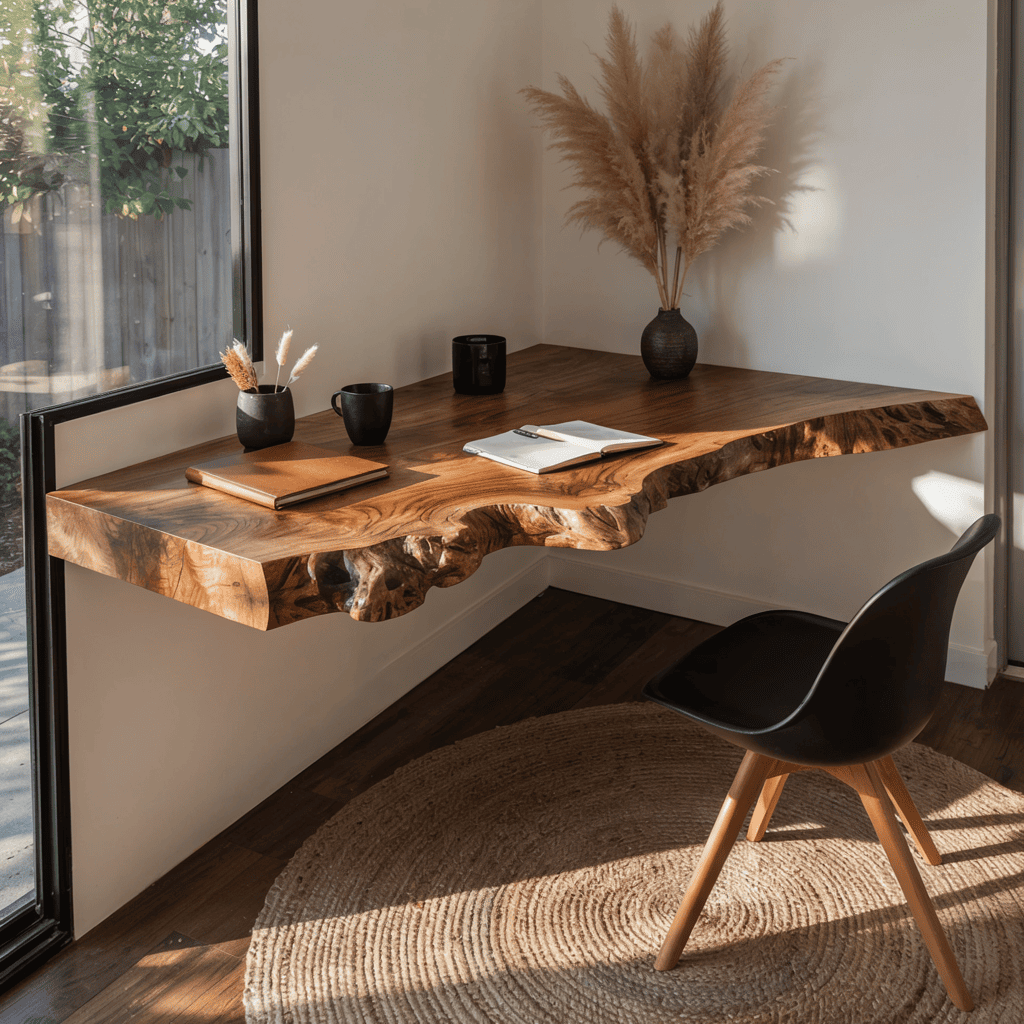
Corner Desk Dimensions: The Exact Numbers to Measure Before You Buy
Corner desk dimensions are where most people cut corners on the actual planning. They eyeball the wall, order a desk that "looks about right" in photos, and then discover the chair won't roll back, or the deepest part of the corner is unreachable dead space. This guide gives the exact measurements to check before you buy - by leg length, depth, height, and the clearance space people consistently forget to measure.
For the general overview of corner desk types and where they work in a room, see our corner desk buying guide. This article is just the numbers.

The Three Measurements That Matter Most
-
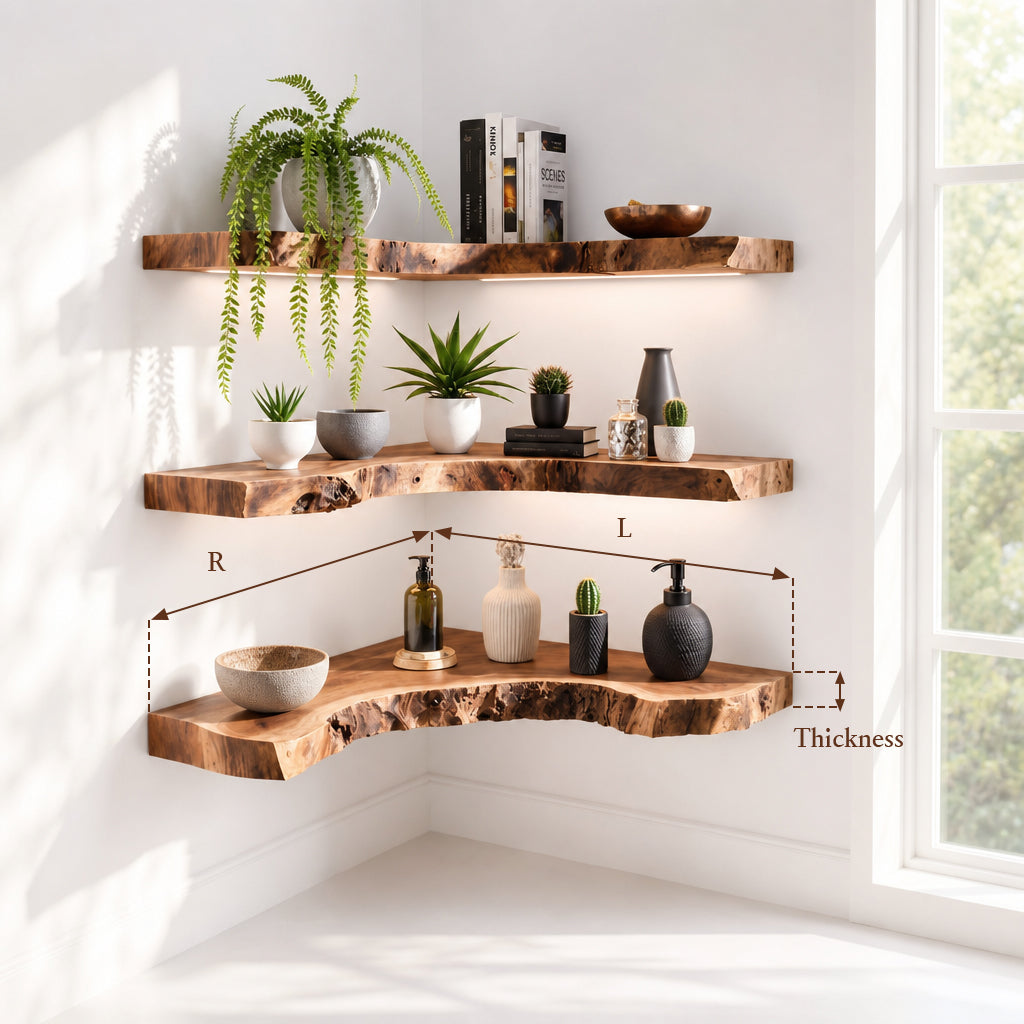
Wall-to-wall corner depth (each leg). Measure from the corner point out along each wall to where you want the desk to end. Most corner desks run 40-60" per leg, with the corner itself adding 20-24" of depth at the angle point.
-
Desk depth (front to back). Standard corner desk depth is 20-24" at the sides, tapering or curving through the corner. Deeper corners (24"+) work better for multi-monitor setups; shallower ones (18-20") suit laptop-only use.
-
Corner clearance behind the desk. Leave at least 30-36" of clear floor space in front of the desk for the chair to pull out and roll. This is the number people forget - they measure the desk footprint but not the chair's swing radius.\

Standard Corner Desk Dimensions by Room Size
| Room type | Recommended leg length (each side) | Depth | Total corner footprint |
|---|---|---|---|
| Small bedroom / studio nook | 36-42" | 18-20" | Compact, minimal intrusion |
| Standard home office | 42-55" | 20-24" | Balanced work surface |
| Dedicated large office | 55-72" | 24-30" | Maximum surface, multi-monitor |
Use your available wall length on each side of the corner as the starting constraint, not the desk you liked in a photo. If your wall only offers 40" per leg, a 60" desk simply won't sit flush - you'll either overhang past a doorway or window, or the desk will look crammed into a space too small for it.

Corner Desk Height
Standard desk height applies to corner desks the same as any desk: 28-30 inches from the floor to the work surface. This matches standard office chair height ranges and keeps wrist position neutral for typing.
If you're pairing the desk with a standing option, look for adjustable-height corner units. These are less common than standard L-shaped standing desks, since the angled or curved top needs a more complex frame to support height adjustment evenly across the surface.

Corner Desk Depth by Use Case
Depth is the dimension most tied to what you'll actually do at the desk, not just the room size:
| Use case | Recommended depth |
|---|---|
| Laptop only, minimal desk items | 18-20" |
| Single monitor + keyboard/mouse | 20-24" |
| Two monitors, side by side | 24-26" |
| Three monitors or a monitor arm setup | 26-30" |
| Drawing tablet or drafting alongside computer work | 28-30"+ |
A desk that's too shallow for your monitor setup forces the screen closer than the recommended 20-28" viewing distance, which leads to eye strain over long sessions. If in doubt, size up on depth rather than down - a slightly deeper desk is a minor space cost, while a too-shallow one is a daily ergonomics problem.

Chair Clearance: The Number Everyone Forgets
This is the single most common corner desk sizing mistake: measuring the desk's footprint against the wall, but not the space needed in front of it.
Minimum clearance: 30 inches of clear floor from the desk edge to the nearest obstacle (wall, furniture, walkway), enough to sit down and push the chair back partially.
Comfortable clearance: 36 inches or more, especially if you roll the chair back frequently to stand, stretch, or reach shelving behind you.
How to check it: Once you've marked out the corner desk's footprint with tape on the floor, sit in your actual chair at the position where you'd work, then push back as far as you normally would. If the chair hits a wall, a bed frame, or another piece of furniture before you're comfortable, either the desk needs to be smaller, or the corner isn't the right spot.

Measuring the Dead Zone in a True Corner Desk
If you're considering a true corner desk (single diagonal or curved surface, not an L-shape), there's one more measurement worth taking: how far you can actually reach into the back of the corner without leaning forward out of your seat.
Sit at a comparable distance from a table edge (or use painter's tape to mark the intended desk edge) and reach toward the corner point. Mark where your reach comfortably stops. Anything beyond that mark is functionally dead space - fine for decor, a monitor stand base, or rarely-used storage, but not for anything you need during daily work. Knowing this in advance helps you judge whether a true corner shape or an L-shaped desk (which keeps both legs at a consistent, reachable depth) makes more sense for your workflow.

Quick Reference Table
| Measurement | Small room | Standard office | Large office |
|---|---|---|---|
| Leg length (each side) | 36-42" | 42-55" | 55-72" |
| Depth | 18-20" | 20-24" | 24-30" |
| Height | 28-30" | 28-30" | 28-30" |
| Chair clearance | 30" min | 30-36" | 36"+ |
Common Dimension Mistakes
Measuring the wall but not the chair swing. A desk that fits the corner perfectly is still a problem if there's no room to roll the chair back.
Choosing depth based on the desk's looks, not the monitor count. Two or three monitors need at least 24-26" of depth to maintain a healthy viewing distance - a stylish 18" desk won't accommodate that setup comfortably.
Ignoring the reach limit on a true corner desk. The back of a diagonal or curved corner desk often sits beyond comfortable reach. Measure it before assuming you'll use every inch of surface.
Skipping outlet placement in the sizing plan. Corners frequently have fewer accessible outlets than a flat wall run. Confirm cable routing distance as part of your measurements, not as an afterthought.
Ashdeco Corner Desks by Size
Ashdeco's corner and L-shaped desks span the range covered above, from compact floating corner slabs to full-depth L-shaped setups:
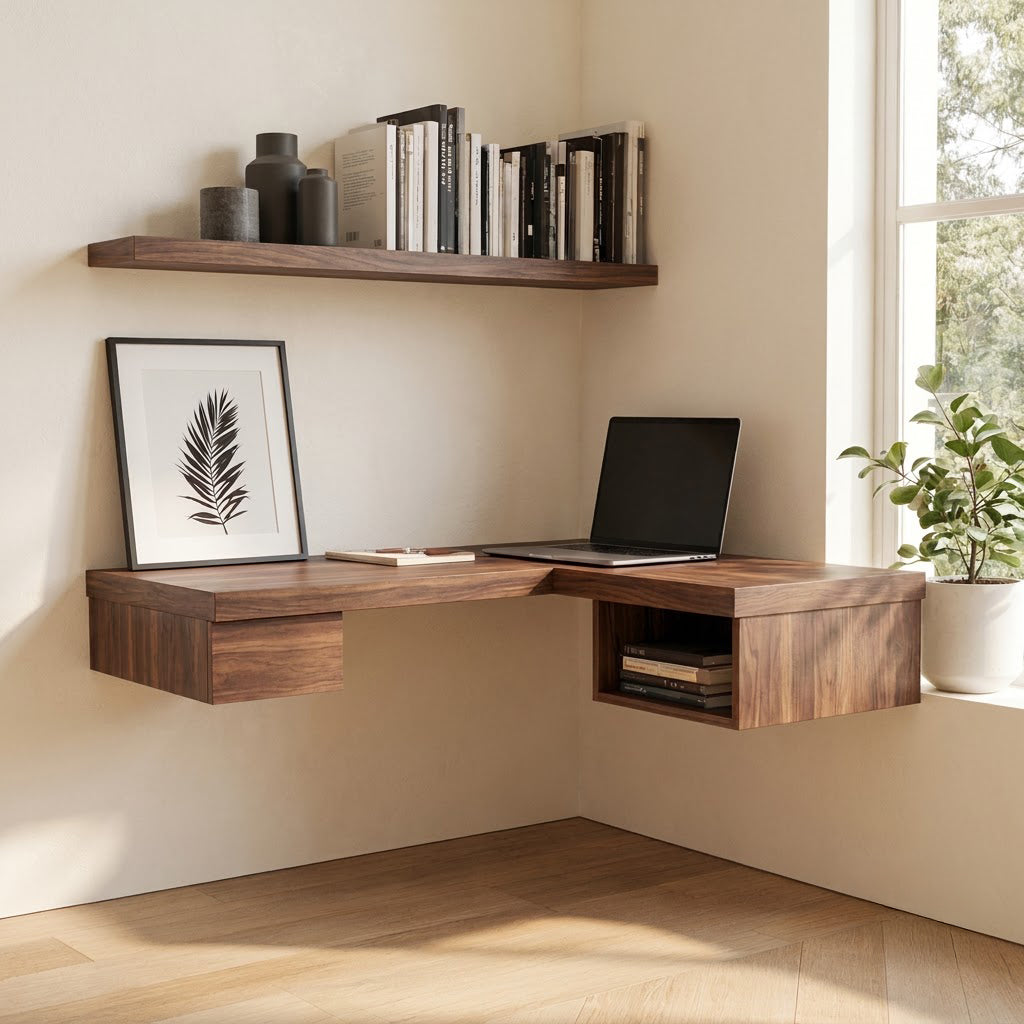
- Compact, floating: Sculptural Floating Live Edge Solid Wood Corner Desk
- True corner, floor-standing: Corner Live Edge Solid Wood Desk - Organic Modern Writing Table
- Full L-shaped, larger footprint: Live Edge L-Shaped Desk – Handmade Solid Wood Corner Desk
Browse the full range in our desks collection.
FAQ
What is the standard size of a corner desk?
Most corner desks run 40-60 inches per leg, with a depth of 20-24 inches. Small-room versions can go as compact as 36" per leg with 18" depth; large office versions can extend to 72" per leg with 24-30" depth.
How much space do I need behind a corner desk?
Leave at least 30-36 inches of clear floor space for the chair to pull out and roll comfortably. This is separate from the desk's own footprint against the walls.
What depth should a corner desk be for two monitors?
At least 24-26 inches to maintain a proper viewing distance of 20-28 inches from your eyes to the screens.
How tall should a corner desk be?
Standard desk height applies: 28-30 inches from the floor to the work surface, matching typical office chair ergonomics.
How do I know if the back corner of my desk will be usable?
Sit at your normal working distance and reach toward the corner point. Mark where your comfortable reach stops - anything beyond that is effectively dead space for daily tasks.
Measure your actual corner and your actual chair before you buy, not just the wall length. The numbers above are the starting ranges - your specific room and setup will narrow them further.