Corner Desk Buying Guide: Types, Sizes, Layouts & How to Measure
A corner desk turns dead wall space - the angle nobody puts furniture against - into a real workstation. That's the appeal: you get a functional desk without eating into the middle of the room. But "corner desk" covers more ground than most shoppers realize, from a single diagonal slab to a full two-legged L-shaped setup, and picking the wrong type for your space is the most common buying mistake.
This guide walks through the types available, how to think about sizing your space, the layouts that actually work in real rooms, and a general buying checklist. If you want the exact numbers - leg lengths, depths, clearance measurements - we cover those in full in our corner desk dimensions guide. If you're stuck deciding between a true corner desk and an L-shaped desk, we break that decision down completely in L-shaped desk vs corner desk.
As a handmade furniture brand that builds solid wood corner and L-shaped desks, here's the overview we walk customers through before they get into specific measurements.

What Counts as a Corner Desk?
"Corner desk" gets used as an umbrella term for any desk designed to sit in a 90-degree corner, but there are a few genuinely different shapes underneath that label:
- A true corner desk - a single continuous surface, diagonal or curved, that spans the corner directly.
- An L-shaped desk - two rectangular surfaces joined at a right angle, one against each wall.
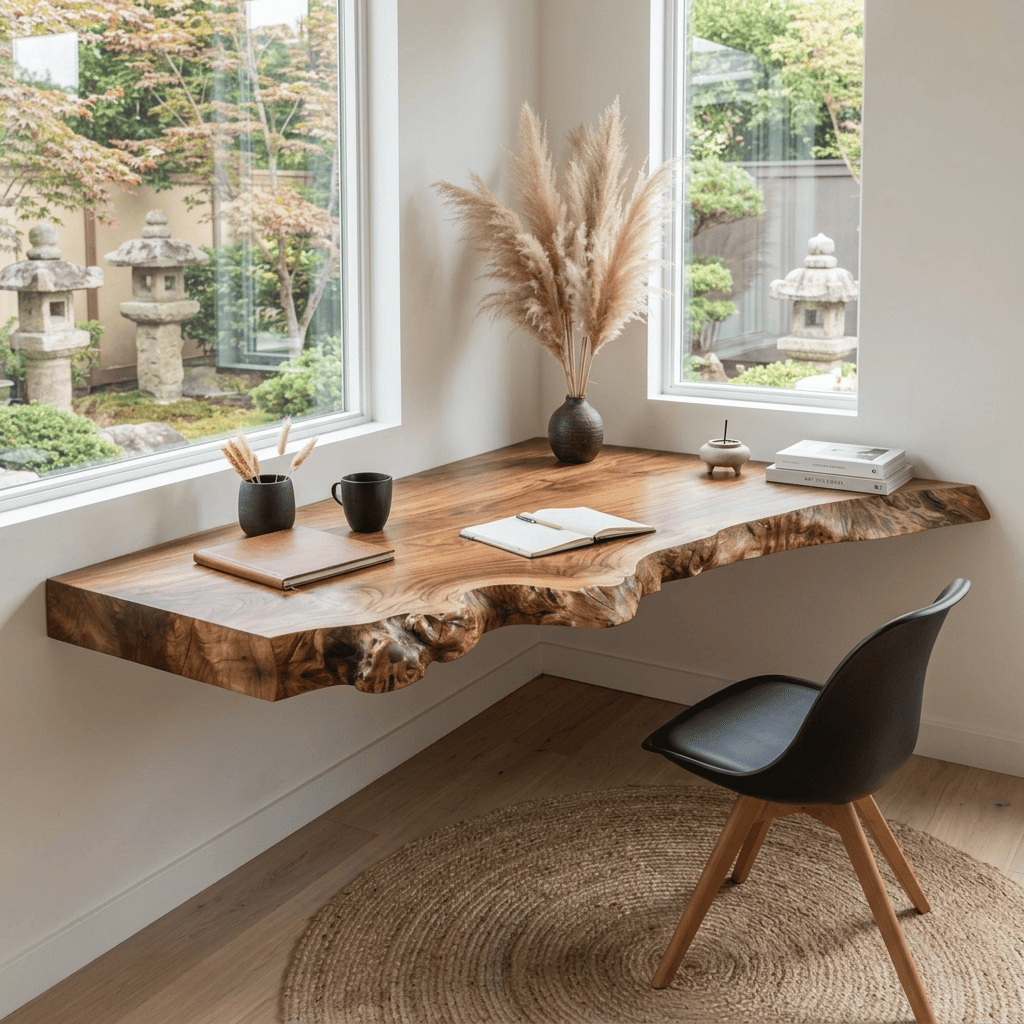
- A floating/wall-mounted corner desk - either shape above, but mounted to the wall instead of standing on legs.
They all solve the same basic problem (using a corner instead of a flat wall), but they behave differently in terms of usable surface, floor footprint, and how much you can actually reach without leaning. The full breakdown of which shape fits which situation is in our L-shaped desk vs corner desk comparison - worth reading before you start comparing specific listings.

Types of Corner Desks
1. Solid Corner (Diagonal or Curved Front)
A single piece that angles or curves across the corner. Compact and visually minimal - this is the shape most people picture when they hear "corner desk."
Best for: small rooms, single-monitor setups, minimalist aesthetics where you want the desk to visually disappear into the corner.
2. L-Shaped Desk (Two Legs at 90°)
Two rectangular surfaces meeting at a right angle, each running full-depth along its own wall. Generally the better choice if you need consistent usable surface area rather than just a corner-shaped footprint.
Best for: multi-monitor work, home offices that double as hobby space, anyone who needs to spread out physical materials across a wider surface.

Ashdeco's Live Edge L-Shaped Desk – Handmade Solid Wood Corner Desk falls into this category.
3. Floating/Wall-Mounted Corner Desk
Built into brackets or a wall-mounted frame rather than standing on floor legs. Saves floor space entirely and suits very small rooms.
Best for: apartments, small bedrooms doubling as offices, anyone prioritizing floor space over under-desk storage.
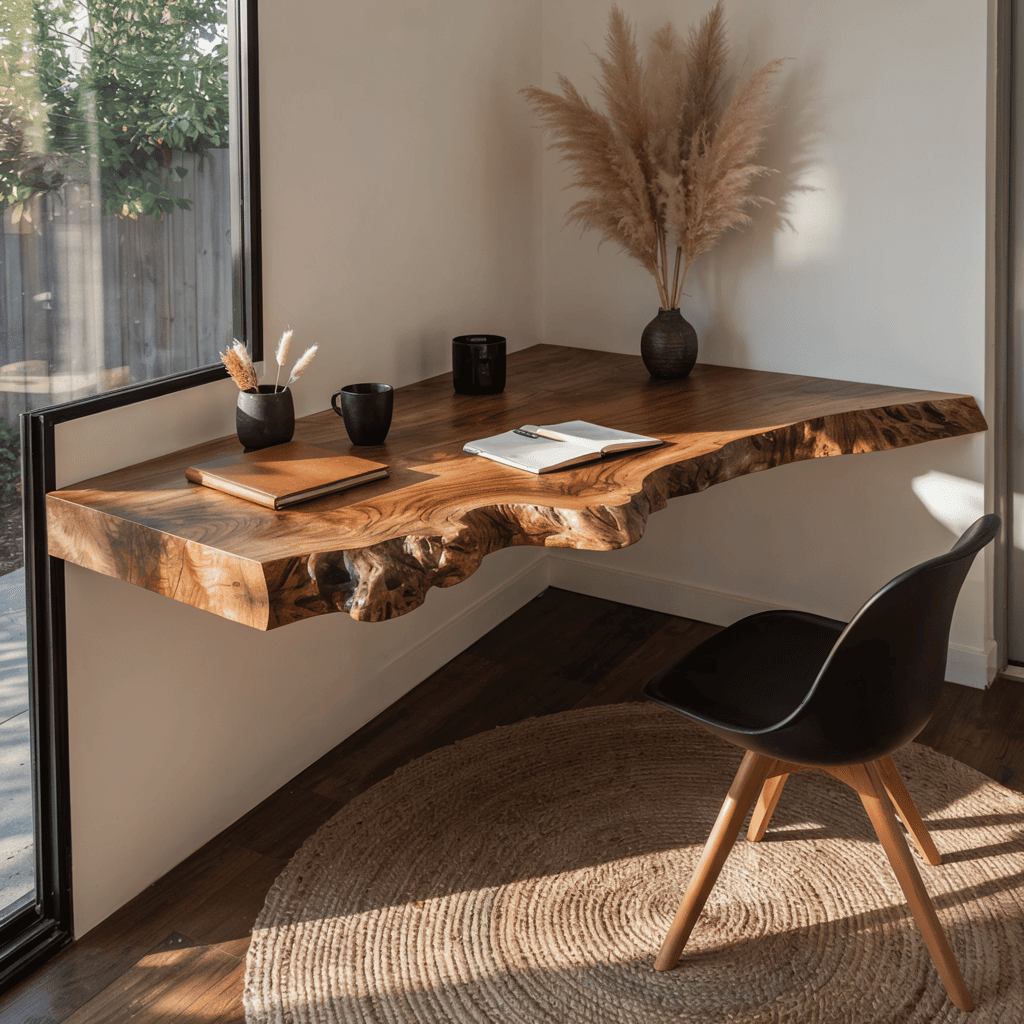
Our Sculptural Floating Live Edge Solid Wood Corner Desk is built specifically for this - a live-edge slab that spans the corner without floor-standing legs.

4. Corner Desk with Integrated Storage
Some corner and L-shaped desks include built-in drawers, cubbies, or shelving under one or both legs. Adds functional storage but also adds visual bulk and can reduce legroom on the side with drawers.
See the Modern Handcrafted Solid Wood Floating L-Shaped Corner Desk with Integrated Storage for an example that balances both.

Sizing: The Short Version
Before you shop, you need three rough numbers: how much wall length each leg of the corner offers, how deep a desk your room can accommodate, and how much clear floor space you need behind it for the chair.
As a starting point, most corner desks run 36-72 inches per leg depending on room size, with a depth of 18-30 inches, and standard desk height of 28-30 inches from the floor. Exact sizing by room type, monitor count, and chair clearance math is covered in full detail in the corner desk dimensions guide - that's the article to read before you pull out a tape measure.

Layouts: Where a Corner Desk Actually Works
Bedroom corner (opposite the bed). The most common home-office layout in small spaces. Choose a corner that isn't the first thing visible from the doorway if you want the room to still read as a bedroom, not an office.
Living room corner, away from foot traffic. Works well if the corner isn't a walkway. Avoid placing a corner desk anywhere someone needs to walk behind your chair to reach another part of the room.
Under a window, in the corner. Great for natural light, but check monitor glare before committing - facing a window directly can wash out the screen, while a side angle usually works better.
Closet conversion. A shallow corner desk can work in a converted closet, but confirm ceiling height and watch for door swing that might clip the desk's edge.
Avoid: placing a corner desk in a genuine walking-path corner, like the turn into a hallway. Even a compact footprint interrupts the flow there.
General Buying Checklist
- Corner type: true corner desk (compact, single surface) vs L-shaped (more usable surface, larger footprint) vs floating (saves floor space, no under-desk storage)
- Wall length available on each side of the corner
- Chair clearance - room to roll back and swing the chair, not just the desk's own footprint
- Monitor setup - single screen vs multi-monitor changes the depth you need
- Storage needs - integrated drawers add bulk and reduce legroom on that side
- Material - solid wood holds up to daily use far better than laminate or particleboard, especially at a corner joint where two surfaces meet under stress
Ashdeco Corner and L-Shaped Desks
Every Ashdeco corner and L-shaped desk is solid hardwood or live-edge slab construction - no laminate, no particleboard. Our range covers the full spread of types above:
- True corner, floating: Sculptural Floating Live Edge Solid Wood Corner Desk
- L-shaped, with storage: Modern Handcrafted Solid Wood Floating L-Shaped Corner Desk with Storage
- L-shaped, handmade solid wood: Live Edge L-Shaped Desk – Handmade Solid Wood Corner Desk
Browse the full range in our desks collection.
FAQ
What is a corner desk?
A desk designed to sit in a 90-degree wall corner instead of against a single flat wall. It can be a single diagonal or curved surface, or two rectangular surfaces joined at a right angle (an L-shaped desk).
Is a corner desk a good choice for a small room?
Yes, generally the best choice. A true corner desk or a floating corner desk uses otherwise-dead wall space and keeps the center of a small room open.
Do I need an L-shaped desk or a true corner desk?
Depends on how much usable surface you need. See our full L-shaped desk vs corner desk breakdown for the complete decision framework.
What size corner desk do I need?
It depends on your room and monitor setup. Full exact measurements - by room size, leg length, depth, and chair clearance - are in our corner desk dimensions guide.
Can a corner desk have storage?
Yes. Many corner and L-shaped desks include built-in drawers or cubbies under one leg. This adds storage but reduces legroom on that side, so check clearance if you'll sit close to it.
Start with the corner you have and the work you actually do there, then narrow down to a specific type and size. The two follow-up guides linked above cover the exact numbers and the corner-vs-L-shaped decision in full depth.