






Quick view
- The Core Difference Between a Floating and Traditional Bathroom Vanity
- Bathroom Vanity Installation & Wall Support
- Storage & Organization Reality
- Cleaning & Maintenance
- Plumbing & Trap Height - The Gap Most Guides Skip
- Accessibility & Height Flexibility
- Style & Visual Impact
- Space & Room Size
- Cost Comparison
- Resale Value & Buyer Perception
- Floating vs Traditional - Quick Decision Table
- Common Mistakes
- My Recommendation: Which Bathroom Vanity to Choose
- FAQ
Shop this guide
Handcrafted Bathroom Vanities, made to order in solid wood.
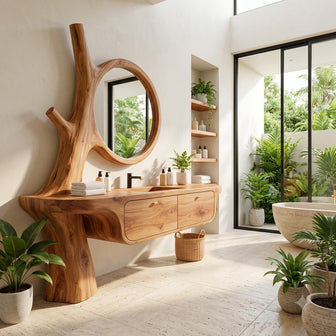
 Sculpted Tree Trunk Solid Wood Bathroom Vanity with Integrated Circular Mirror Frame and Dual Drawers
From $3,276.0010% off at checkout
Sculpted Tree Trunk Solid Wood Bathroom Vanity with Integrated Circular Mirror Frame and Dual Drawers
From $3,276.0010% off at checkout
 Curved Floating Solid Wood Bathroom Vanity Sculptural Wall Mounted Washstand
From $1,843.00
Curved Floating Solid Wood Bathroom Vanity Sculptural Wall Mounted Washstand
From $1,843.00
 Curved Arch Solid Wood Bathroom Vanity Freestanding Four Drawer Washstand
From $2,365.0010% off at checkout
Curved Arch Solid Wood Bathroom Vanity Freestanding Four Drawer Washstand
From $2,365.0010% off at checkout
 Sculptural Tree Trunk Solid Wood Bathroom Vanity Organic Live Edge Storage Console
From $2,154.0010% off at checkout
Sculptural Tree Trunk Solid Wood Bathroom Vanity Organic Live Edge Storage Console
From $2,154.0010% off at checkout
 Sculpted Branch Pedestal Solid Wood Bathroom Vanity Organic Live Edge Washstand
From $1,432.00
Sculpted Branch Pedestal Solid Wood Bathroom Vanity Organic Live Edge Washstand
From $1,432.00
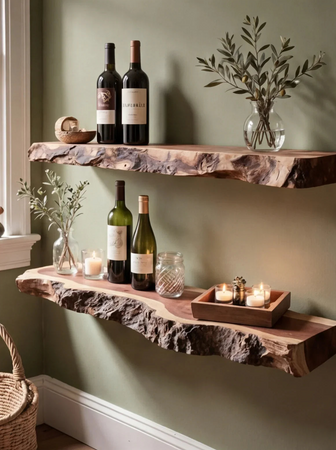
 Floating Live Edge Solid Wood Bathroom Vanity Wall Mounted Storage Cabinet
From $2,316.0010% off at checkout
Floating Live Edge Solid Wood Bathroom Vanity Wall Mounted Storage Cabinet
From $2,316.0010% off at checkout
Floating Bathroom Vanity vs Traditional: Which One Actually Fits Your Space?
You're remodeling a bathroom. You've picked tile, maybe even a mirror. Then you hit the question everyone stalls on: floating vanity or traditional?
It's not just "modern vs classic." One changes how you clean the floor, one changes how much stuff you can hide, and one of them might cost you $600 more in labor you didn't plan for.
This guide walks through the real trade-offs - not the Pinterest version, the one you'll actually live with.

The Core Difference Between a Floating and Traditional Bathroom Vanity
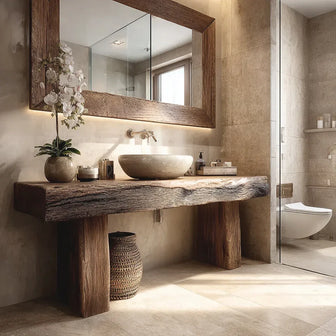
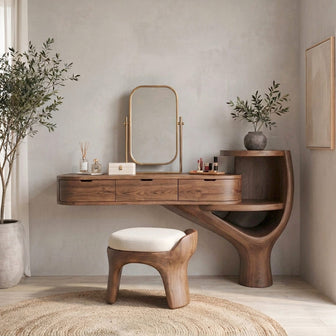
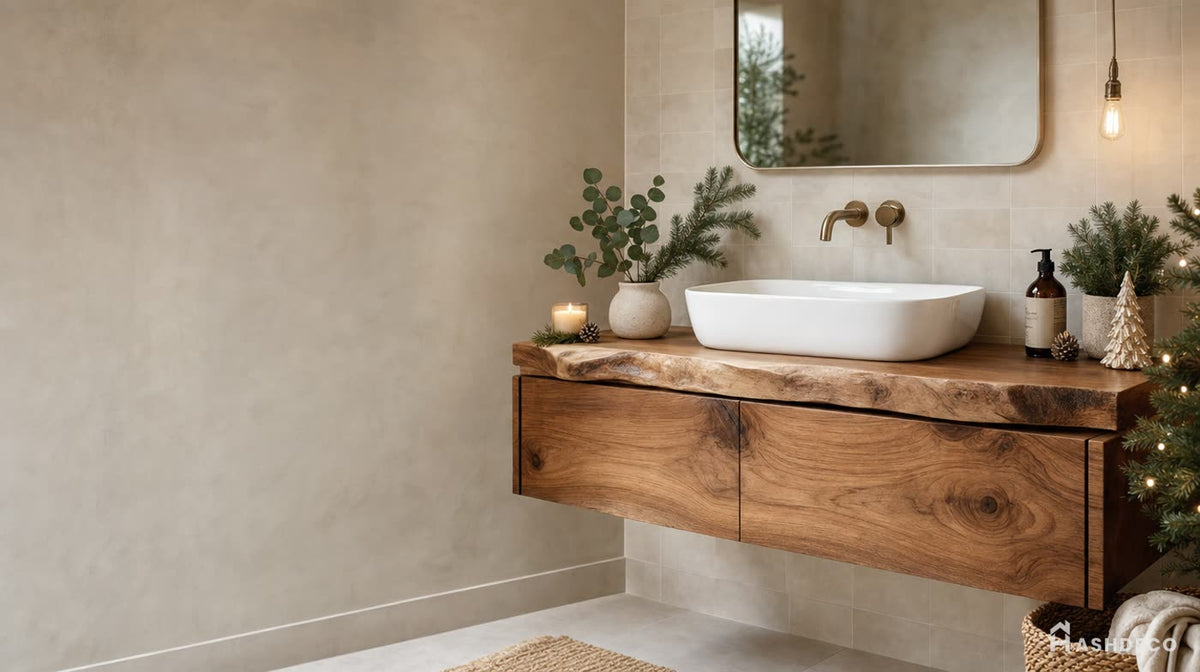
A floating vanity mounts directly to the wall with no legs or base touching the floor, leaving a visible gap underneath (usually 4-8 inches). A traditional vanity sits on the floor - freestanding, self-supporting, and anchored down rather than up.
That one structural decision ripples through everything: storage, cleaning, plumbing visibility, installation cost, and how the room feels. If you want the full breakdown of how floating vanities work - mounting systems, weight limits, wall requirements - check our complete floating bathroom vanity guide. This article focuses on the comparison side: which one belongs in your bathroom.

Bathroom Vanity Installation & Wall Support
This is where the two types diverge fast.
Traditional vanities sit on the floor. You slide them in, level the feet, and they're done. If your studs aren't perfectly spaced, doesn't matter - the floor carries the weight. A handy homeowner can install one in under an hour with basic tools.
Floating vanities need structural anchoring. The vanity hangs entirely from wall studs or solid blocking behind the drywall. If your studs don't align with the bracket holes (and they usually don't), you need a contractor to add blocking - which means opening the wall, adding 2x6 lumber, and patching it back. On plaster or lath walls, you might need toggle bolts or a full mounting rail.
Real-world cost difference:
- Traditional vanity install: $0 DIY, $100-200 if you hire someone for plumbing hookup
- Floating vanity install: $200-600 labor, plus $150-300 if wall blocking is needed
- Add $300-800 if plumbing needs rerouting (more on that below)
So if your budget is tight and your walls aren't prepped, a traditional vanity is the simpler call. If you're already doing a full gut remodel and the walls are open, floating installation becomes much cheaper - that's the moment to do it.



Storage & Organization Reality
The storage gap is the single biggest daily-life difference.
A 36-inch traditional vanity typically gives you two drawers plus a cabinet, maybe a shelf inside. You can stash towels, cleaning supplies, backup toiletries, a plunger, everything - and close the door. Out of sight.
A 36-inch floating vanity usually has one shallow drawer, maybe two. There's no base cabinet because the unit is mounted to the wall, not sitting on the floor. You lose 30-40% of usable storage space compared to a traditional vanity of the same width.
This matters most in family bathrooms. If four people share one bath, a floating vanity with a single drawer is going to feel cramped within a week. But if you have a powder room, a guest bath, or a primary bathroom with a separate linen closet nearby, storage becomes less of a constraint.
The workaround people actually use: pair a floating vanity with a wall-mounted medicine cabinet, a tall freestanding shelf tower, or floating shelves above the toilet. Plan your storage before you buy the vanity, not after you've already mounted it.
For more detail on sizing and storage planning for floating vanities specifically, see the floating vanity buying guide.
Cleaning & Maintenance
Here's where floating vanities earn their reputation.
With a traditional vanity, dust, hair, and water collect in the gap between the cabinet base and the floor. You've seen it - that dark ring around the bottom you can't quite reach with a broom handle. In humid bathrooms, that area is also where mold likes to set up shop, especially if the vanity has a toe-kick recess.
A floating vanity eliminates that entirely. The gap underneath lets a mop slide straight through. No bending, no wedging a cloth behind the toilet brush holder, no mystery gunk. The visible floor space also makes it easier to spot leaks early - a small drip from a supply line is obvious when the floor underneath is fully exposed.
The trade-off: the top edge of a floating vanity collects dust just like any horizontal surface, and because the unit is mounted higher, you'll notice it more. And if you chose exposed plumbing (visible P-trap and supply lines below the vanity), those pipes gather dust too - though many people find brushed brass or chrome traps look intentional enough that it doesn't bother them.
In short: floating wins on floor cleaning, traditional wins on "nothing visible to dust." Both are manageable; it's about which annoyance you'd rather live with.

Don't miss
These pieces qualify for 10% off orders over $2,000. Applied automatically at checkout.
10% off
Sculpted Tree Trunk Solid Wood Bathroom Vanity with Integrated Circular Mirror Frame and Dual Drawers
From $3,276.00
10% off at checkout
10% off
Curved Arch Solid Wood Bathroom Vanity Freestanding Four Drawer Washstand
From $2,365.00
10% off at checkout
10% off
Sculptural Tree Trunk Solid Wood Bathroom Vanity Organic Live Edge Storage Console
From $2,154.00
10% off at checkout
10% off
Floating Live Edge Solid Wood Bathroom Vanity Wall Mounted Storage Cabinet
From $2,316.00
10% off at checkout
Plumbing & Trap Height - The Gap Most Guides Skip
This is the part nobody warns you about until the plumber shows up.
Traditional vanities hide everything. The P-trap, supply lines, shutoff valves - all tucked behind the cabinet base where you never see them. You don't need to think about pipe placement because the vanity body covers it.
With a floating vanity, those same pipes are suddenly exposed underneath the unit unless you plan ahead. And that changes two things:
Trap height matters more than you think. Standard P-traps sit about 6-8 inches below the drain opening. A traditional vanity's cabinet base covers that entire zone. A floating vanity mounted with a 6-inch floor gap leaves the trap right in the sightline. You've got three options:
- Route plumbing inside the wall (cleanest look, costs $300-800 extra)
- Leave pipes exposed but upgrade to decorative chrome or brass fittings ($30-120 for nicer hardware)
- Mount the vanity higher (10-12 inch gap) so pipes sit above the visible underside - works, but changes the proportions
Supply line routing. Traditional vanities connect directly from the wall stub-out to the faucet, hidden inside the cabinet. Floating vanities need those same lines to either run inside the wall or drop visibly from the vanity body. If your existing stub-out is centered and your new floating vanity has an offset drain, you're looking at a plumber to reroute.
If you're doing a new build or full gut, run the plumbing lines inside the wall before drywall goes up. It's cheap at that stage. If you're retrofitting an existing bathroom, exposed decorative plumbing is a perfectly valid choice - lots of designers now treat chrome P-traps as a design feature rather than something to hide.
For more detail on plumbing considerations specific to floating installations, see the floating vanity guide's plumbing section.

Accessibility & Height Flexibility
Traditional vanities come in fixed heights: 30-32 inches for standard, 34-36 inches for comfort-height. That's what you get - no adjustments after installation.
Floating vanities let you pick the mounting height. Wheelchair-accessible bathroom? Mount the underside at 27 inches with open knee space below. Tall household? Go 36-38 inches to the countertop. Kids' bathroom? Mount lower now and remount higher as they grow.
If bathroom height is part of your decision, we've covered the full breakdown in our bathroom vanity height guide. The short version: floating gives you control, traditional gives you consistency.
Style & Visual Impact
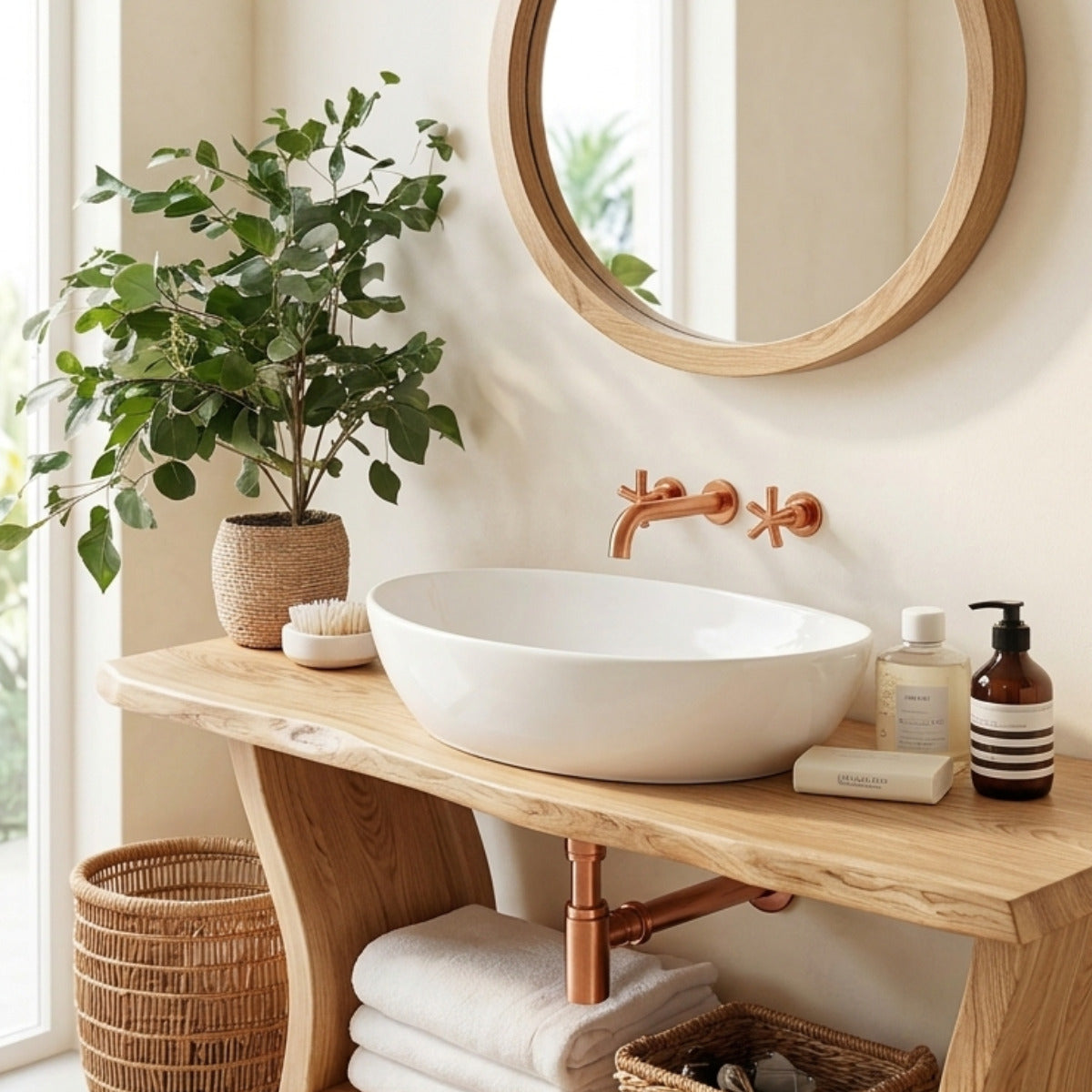
Floating vanities create an open, airy feel. Less furniture touching the ground means the room reads as larger - interior designers call it "visual weight reduction." They're the default for modern, minimalist, and spa-style bathrooms.
Traditional vanities feel grounded and furniture-like. They carry warmth, especially in solid wood with visible grain. They fit naturally into farmhouse, traditional, and transitional spaces where the vanity is meant to look like a piece of furniture rather than built-in cabinetry.
That said, the mounting style doesn't lock you into one aesthetic. A live edge solid wood floating vanity looks right at home in a rustic cabin bathroom. A sleek lacquered traditional vanity works in a contemporary space. The material and finish drive the style more than whether it touches the floor.
If you're pairing your vanity with other handcrafted wood pieces - like a console table nearby or matching driftwood bathroom vanities - the room should feel balanced as a whole. Height, material, and visual weight all play together.
Space & Room Size
Bathroom dimensions should drive the decision more than style preference.
For small bathrooms (under 40 sq ft, typically 5x7 or smaller), a floating vanity creates visible floor space that makes the room feel less cramped. A 24-inch floating unit keeps the space functional without dominating it. For larger bathrooms (60+ sq ft), a traditional vanity helps fill the room proportionally and provides the storage that bigger households usually need.
Here's a practical sizing reference:
| Vanity Width | Depth Range | Floating Best For | Traditional Best For |
|---|---|---|---|
| 18-24" | 16-18" | Powder rooms, half baths, tiny apartments | Small guest baths, laundry room combos |
| 30-36" | 18-20" | Single-sink baths, secondary bathrooms | Standard family bathrooms, full baths |
| 42-48" | 18-21" | Larger primary baths, master ensuites | Family bathrooms, shared full baths |
| 60-72" | 18-22" | Double-sink primary suites, luxury remodels | Large family baths, his-and-hers setups |
Depth matters too. Most vanities run 18-22 inches deep, but live edge and organic designs can run wider at the front edge. In a narrow bathroom (5 feet wide), a 22-inch-deep vanity leaves only 38 inches of walkway - tight but usable. If your bathroom is under 5 feet wide, stick to 18-20 inch depth.
For more sizing guidance, the floating vanity guide covers width recommendations in detail, and if you're also thinking about how the vanity relates to other bathroom fixtures, check our guide on coat hook height for mounting reference points.

Cost Comparison
Let's talk real numbers.
Vanity unit cost:
- Traditional (MDF/particle board): $150-600
- Traditional (solid wood): $400-2,500+
- Floating (MDF): $200-800
- Floating (solid wood): $500-3,000+
Installation cost:
- Traditional: $0 DIY, $100-200 professional plumbing hookup
- Floating: $200-600 labor, plus $150-300 for wall blocking if needed
- Plumbing reroute (if needed for floating): $300-800
Total installed cost (realistic range):
- Traditional vanity: $150-2,700
- Floating vanity: $700-5,100
The gap narrows significantly if you're already doing a full remodel with open walls - blocking becomes cheap, plumbing rerouting is straightforward, and the floating vanity starts to make financial sense. But for a simple vanity swap in an existing bathroom, traditional is almost always the cheaper option.
For a detailed installation cost breakdown, the floating vanity guide has a full table with DIY vs professional numbers.
Resale Value & Buyer Perception
When it comes time to sell, buyer expectations matter.
Traditional vanities are the safe choice - they're what most buyers expect in a home. They signal "bathroom that works." No one questions them. For a general resale, a solid traditional vanity in good condition won't hurt your showing.
Floating vanities make a statement. In urban condos, newer builds, and renovated homes, they signal "updated" and "modern." Buyers in those markets notice and appreciate them. But in older homes or traditional neighborhoods, a floating vanity can feel out of place - like the rest of the house hasn't caught up to the bathroom yet.
The sweet spot: primary bathrooms and powder rooms. These are the spaces where buyers most notice vanity style. A floating vanity in a small powder room feels intentional and design-forward. In a family bathroom with kids' toothbrushes everywhere, it can feel like a mismatch with how the space actually gets used.
Floating vs Traditional - Quick Decision Table
| Criteria | Floating Vanity | Traditional Vanity |
|---|---|---|
| Floor cleaning | Mop goes right under | Dust collects at base |
| Storage | 30-40% less cabinet space | Full drawers and base cabinet |
| Installation | Needs wall studs/blocking, $200-600 labor | Sits on floor, simpler install |
| Height | Adjustable to your preference | Fixed at 30-36 inches |
| Plumbing visibility | Pipes exposed unless routed in-wall | Hidden behind cabinet |
| Best for | Small baths, modern style, ADA access | Large baths, heavy storage, budget installs |
| Resale appeal | Modern/urban buyers, primary baths | Broad buyer base, traditional homes |

Whichever Bathroom Vanity You Choose, Make It Solid Wood
Ashdeco's handcrafted vanities come in both floating and freestanding styles - live edge, sculptural root bases, solid hardwood built to handle bathroom humidity for decades.
Shop the Bathroom Vanity Collection →Common Mistakes
Not checking wall structure before buying floating. You fall in love with a vanity, get it home, and discover your studs are 24 inches apart while the bracket needs 16. Now you're paying a contractor to open the wall. Always check stud spacing first.
Choosing floating for a high-humidity, no-vent bathroom. Floating vanities with solid wood look gorgeous, but in a bathroom with no exhaust fan and constant steam, moisture hits the underside of the cabinet where there's no finish. Traditional vanities at least have the floor blocking some of that humidity.
Picking traditional for a room too small. A 36-inch traditional vanity in a 5x5 powder room eats up visual space. The room feels cramped even though the vanity itself isn't oversized. A 24-inch floating unit would keep the same function with a lighter footprint.
Ignoring door clearance. Measure the door swing. A traditional vanity that protrudes 22 inches from the wall can block a bathroom door that swings inward. Floating vanities often come in shallower depths (16-18 inches), which can be the difference between a door that opens and one that hits the cabinet.
My Recommendation: Which Bathroom Vanity to Choose
If you want the honest short version:
- Primary bathroom, adults only: floating vanity - the easier cleaning and adjustable height are worth the install cost
- Family bathroom, kids use it daily: traditional vanity - you need the storage and the lower height works better for mixed users
- Small powder room or half bath: floating vanity - it makes the room feel bigger and you don't need much storage there
- Rental or Airbnb: traditional vanity - tenants don't care about visual weight reduction, they care about where to put their stuff, and the simpler install keeps maintenance costs down
- ADA-accessible bathroom: floating vanity - the adjustable mounting height and open knee space underneath make it the clear choice
- Budget remodel, existing walls: traditional vanity - skip the $600+ install premium and put that money into a better vanity unit
The right answer depends on who uses the bathroom, how much stuff lives in there, and what your walls can handle. Get those three things right and the rest falls into place.
If you're browsing options, check Ashdeco's handcrafted bathroom vanity collection - solid wood, live edge designs in both floating and freestanding styles, built by artisans who know which height actually works in real bathrooms.
FAQ
Are floating vanities more expensive than traditional ones?
Yes - typically $200-800 more when you factor in installation. The vanity unit itself costs about the same, but floating vanities need wall mounting labor ($200-600) and sometimes wall blocking ($150-300). If your walls are already open during a remodel, that gap shrinks significantly.
Can you install a floating bathroom vanity on drywall without studs?
No. Drywall alone holds almost nothing - you need the vanity anchored into at least two wood studs or solid blocking behind the wall. Using toggle bolts in drywall might hold for a few months, but a loaded vanity with a stone top and water in the pipes can easily exceed 200 pounds. Always anchor into structural support.
Do floating vanities hold less than traditional vanities?
Typically 30-40% less. A floating vanity loses the base cabinet entirely and usually has one or two shallow drawers instead of the full drawer stack a traditional vanity provides. If storage matters, plan complementary solutions: wall medicine cabinets, shelf towers, or floating shelves.
Which works better in a bathroom under 40 square feet?
A floating vanity. The visible floor space underneath makes small rooms feel noticeably larger - it's not just aesthetics, the brain actually perceives more space when more floor is visible. A 24-30 inch floating unit keeps the room functional without dominating it.
Are floating vanities harder to install?
Yes, but not impossibly so. If your wall studs align with the vanity brackets and your plumbing lines up, a confident DIYer with a drill and level can install one in an afternoon. If you need wall blocking or plumbing rerouting, hire a professional. A vanity pulling off the wall because of bad installation is not an insurance claim you want to file.
Still deciding between styles? Our floating vanity guide covers mounting, materials, and sizing in depth. For height questions specifically, see our bathroom vanity height guide. And if you want to browse handcrafted solid wood options, check Ashdeco's vanity collection.