Desk in Front of a Window: Genius Idea or Big Mistake?
Putting a desk in front of a window is one of the most debated layout choices in home office design. It looks great in every inspiration photo - natural light, a view, an airy feel. But the same setup causes glare, eye strain, and a washed-out video call background for plenty of people. The right answer depends on what kind of work you actually do at that desk.

The Case For a Desk in Front of a Window
Natural light. Working near a window measurably improves mood and reduces eye fatigue over a full day. That beats relying on overhead or lamp light alone.
A mental break built in. Glancing up at a view - even just sky or trees - gives your eyes a moment off-screen. That matters if you're staring at a monitor for hours.
Good for analog work. If your desk is mostly for writing, reading, sketching, or paperwork, facing a window is close to ideal. There's no screen fighting the light for contrast.

The Case Against a Desk in Front of a Window
Screen glare. A bright window behind your monitor washes out the screen. Your eyes constantly readjust between the bright background and the lit screen. This is the single biggest complaint for anyone doing screen-heavy work.
Video calls look bad. A window behind you backlights your face into a silhouette. If you're on calls often, this layout works against you unless you add front lighting.
Temperature swings. South- and west-facing windows in particular can turn a desk into a hot spot in the afternoon.
Does a Desk in Front of a Window Fit Your Type of Work?
| Type of Work | Desk Facing the Window | Better Alternative |
|---|---|---|
| Writing, reading, paperwork | Works well - no screen glare issue | — |
| Heavy screen/monitor work | Struggles with glare | Perpendicular to the window |
| Frequent video calls | Backlights your face | Window to the side or behind the camera |
| Creative/sketching work | Works well - light and a view aid focus | — |

A Desk in Front of a Window and Feng Shui: The Commanding Position
Separate from glare, a lot of the advice against facing a window comes from feng shui. The ideal desk placement is the commanding position: your back is to a solid wall, and you can see the door from where you sit. Neither the window nor the door should be directly behind you.
Facing a window puts your back to an open, unsupported gap instead of a solid wall. If the window ends up behind you instead, you're sitting with your back to the door - which feels exposed, even if you can't say why.
This is a design tradition, not an ergonomic finding, so treat it as one input rather than a rule. Still, it lines up with something people report on their own: sitting with an open window or a doorway at your back for hours can feel subtly unsettling. Many only notice once they turn the desk around and immediately feel calmer.
If the window has to be behind you (common when it's the only usable wall), place a solid tall piece of furniture behind your chair - a bookshelf, a tall plant, or a credenza. It recreates some of that "solid wall" support without moving the desk.
If you can't avoid facing the window but still want to see the door, angle the desk slightly instead of pointing it dead-center at the glass. You lose a little direct light but gain sightline to the entrance - a trade most people find worth making.

The Middle Ground: Placing the Desk Beside, Not in Front of, the Window
For most screen-based work, turn the desk 90° so the window sits to your side. This avoids the drawbacks of facing it while keeping the light. Standard workplace ergonomic guidance - the kind found in OSHA computer workstation checklists - recommends exactly this: position screens at right angles to windows to control glare. Light washes across the desk instead of hitting your eyes or your camera. If you're right-handed, put the window on your left to reduce shadow from your own hand; reverse it if you're left-handed.
If You Still Want the Desk Facing the Window
- Add a sheer curtain or solar shade to cut glare without blocking the view entirely.
- Angle your monitor slightly down and away from the window rather than dead center. This reduces the direct reflection.
- Increase screen brightness to better match the ambient light outside. This reduces the contrast your eyes are fighting.
- Add a front light source for calls - a small desk lamp or ring light in front of you balances out the window's backlighting.
Space Constraints Change the Calculation
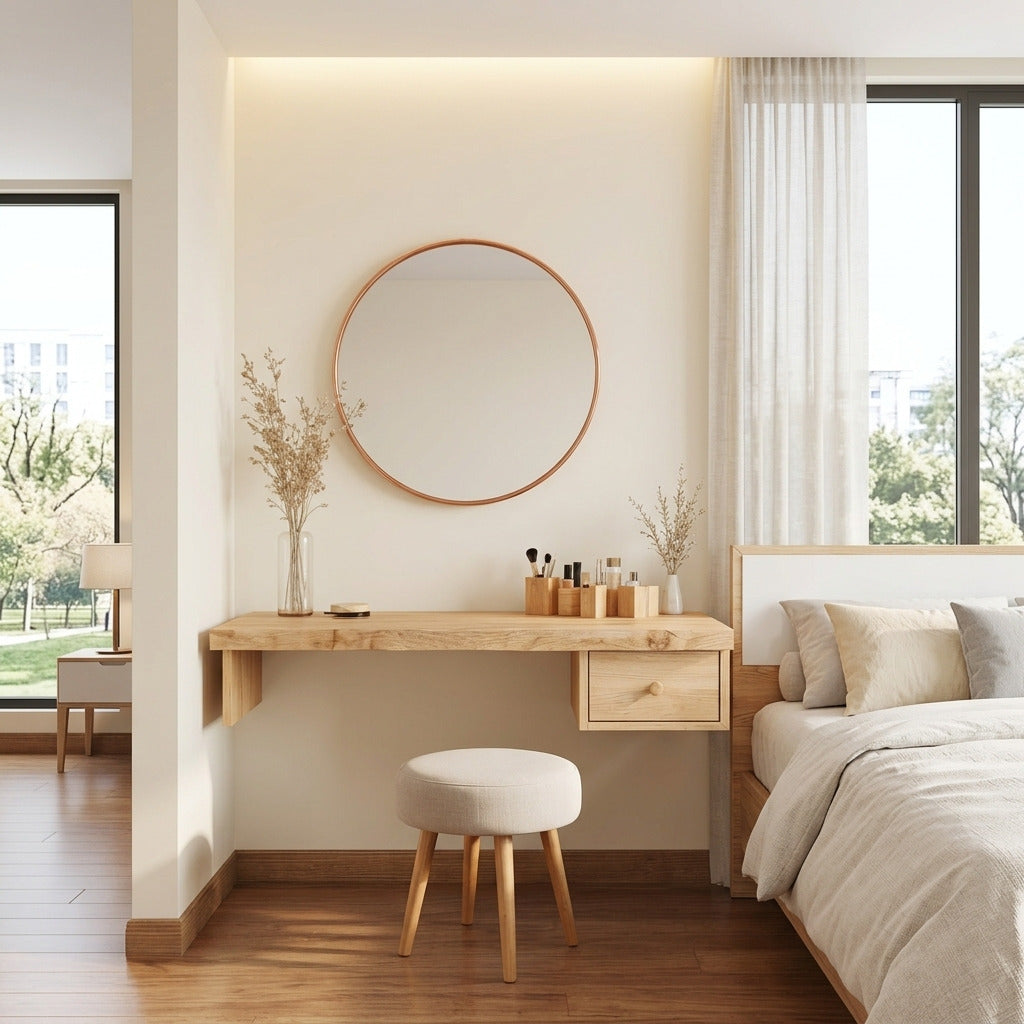
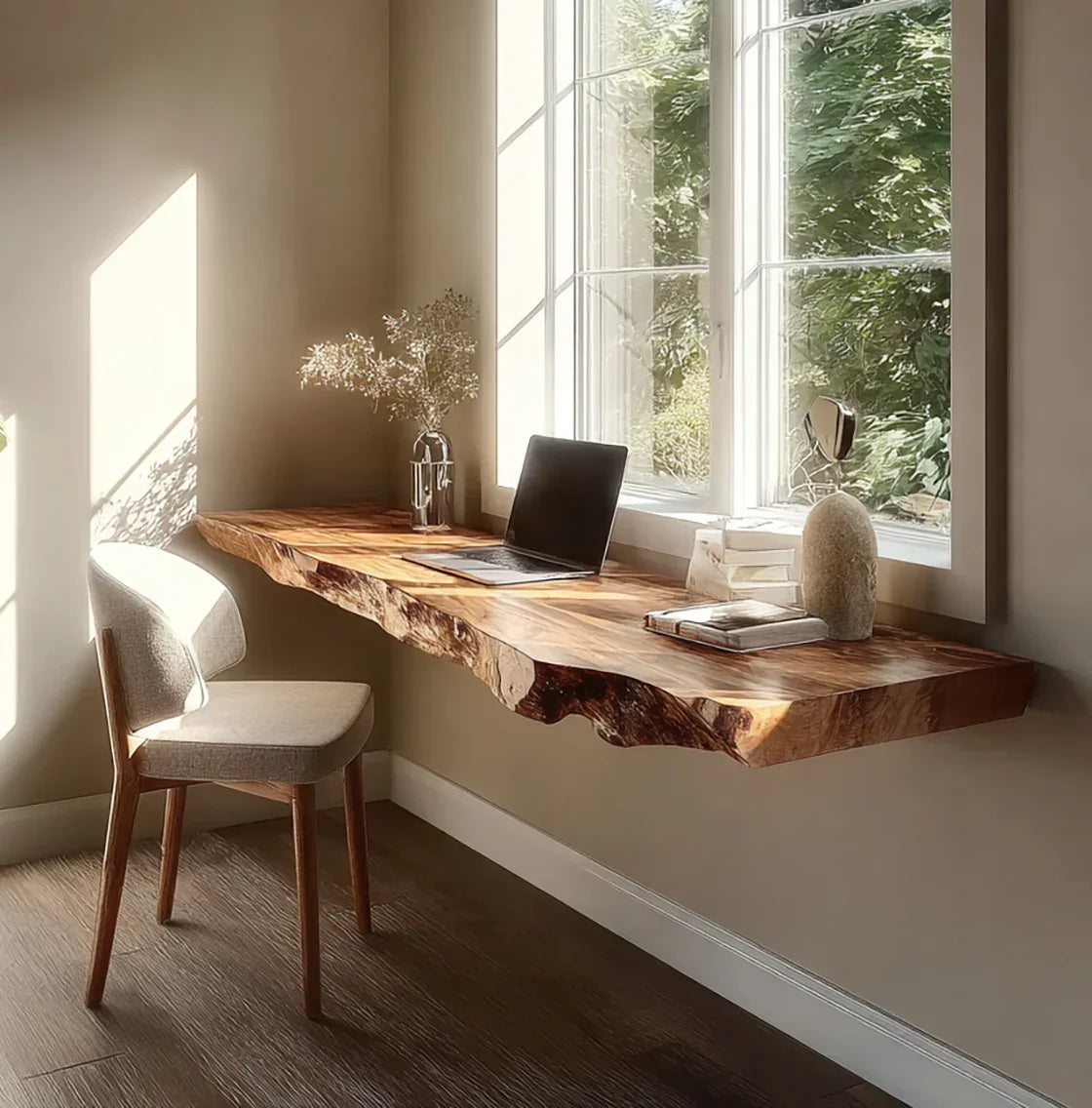
In a lot of homes, the real question isn't "should I face the window." It's "the window wall is the only wall available." If that's your situation, a wall-mounted floating desk solves the spatial half of the problem regardless of orientation. It can be sized to fit the space below or beside a window, with no legs getting in the way of curtains or a radiator. See our desk under window guide for the exact fit, and our full floating desk collection for options.
FAQ
Is a desk in front of a window bad for you?
Not inherently - it depends on your work. It's genuinely difficult for heavy screen use because of glare. But it works well for writing, reading, or creative work with no monitor competing with the light.
Should my desk face the window or have the window behind me?
Neither is ideal for screen work. A desk in front of a window causes screen glare, and a window behind you backlights your face on calls. Perpendicular placement avoids both while keeping the natural light.
How do I stop glare when my desk is in front of a window?
Turn the desk perpendicular to the window if you can. If not, add a sheer curtain or solar shade, angle the monitor away from the light, and raise screen brightness to reduce the contrast.
Is a desk in front of a window good feng shui?
Generally no - feng shui favors the "commanding position," with your back to a solid wall rather than an open window. If the window sits behind or in front of you, angle the desk slightly and add solid furniture behind your chair to offset it.