TV Stand vs Media Console vs Entertainment Center: 3 Types Compared
Most people use "TV stand," "media console," and "entertainment center" interchangeably. They're not the same thing. A TV stand is a simple surface on legs. A media console is a low cabinet with doors and shelves. An entertainment center is a full wall unit with towers and display sections.
Pick the wrong one, and you either waste floor space or run out of storage in six months. Here's how to choose correctly.

The 3 Types at a Glance
| Feature | TV Stand | Media Console | Entertainment Center |
|---|---|---|---|
| Structure | Open frame, legs or pedestal | Low cabinet, doors + shelves | Tall wall unit, multiple sections |
| Height | 18–24" | 20–26" | 50–80"+ |
| Storage | Minimal - open shelf | Moderate - hidden + open | Maximum - cabinets, shelves, display |
| Footprint | Small - 48–72" wide | Medium - 55–80" wide | Large - full wall, 72–96"+ |
| Best for | Minimalist setups, small rooms | Most living rooms, device-heavy setups | Home theater rooms, large collections |
| Price range | $200–$1,500 | $500–$3,500 | $800–$5,000+ |
TV Stand: The Minimal Option
A TV stand is exactly what it sounds like - a surface to set your TV on. It has legs or a pedestal base, maybe one open shelf underneath, and that's it.
What it looks like:
- Open design - no doors, no enclosed compartments
- Typically 18–24" tall, 48–72" wide
- Legs (4 or center pedestal), sometimes a single lower shelf
Who it's for:
- You have few devices (just a TV, maybe a soundbar)
- You want a clean, minimal look
- Your room is small and you don't want visual bulk
- You prefer to mount the TV on the wall and use the stand for decor
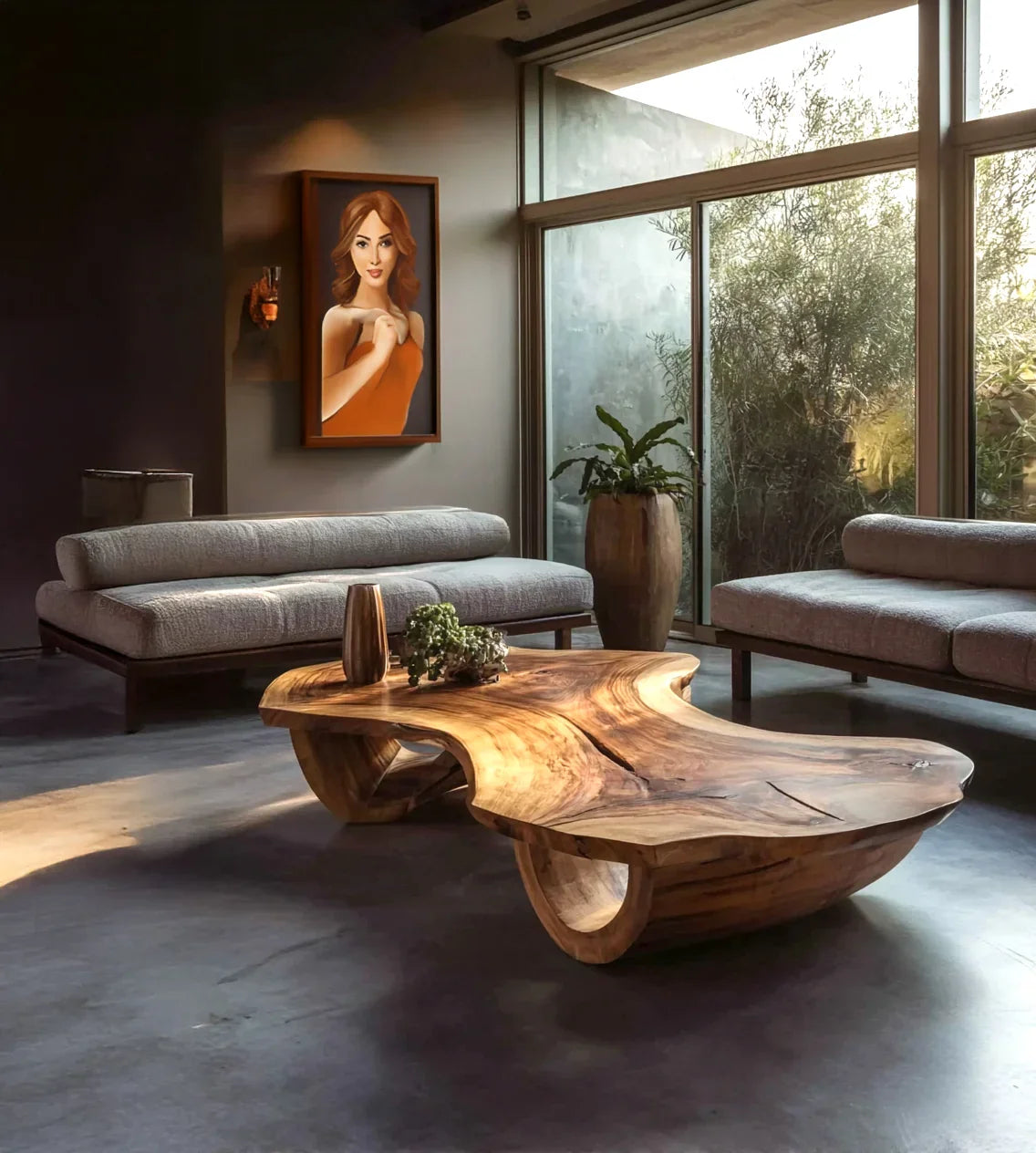
The TV stand philosophy, in short: if you don't have gear that needs to be hidden, you don't need a cabinet at all - just a flat surface at the right height. Some minimalists skip a dedicated TV stand entirely and use a low bench or coffee table instead. Surface area, nothing more.
Limitations:
- No hidden storage for remotes, cables, game consoles
- Devices sit in the open - dust accumulates faster
- Cable management is minimal or nonexistent
- Not ideal if you have kids or pets (everything is reachable)
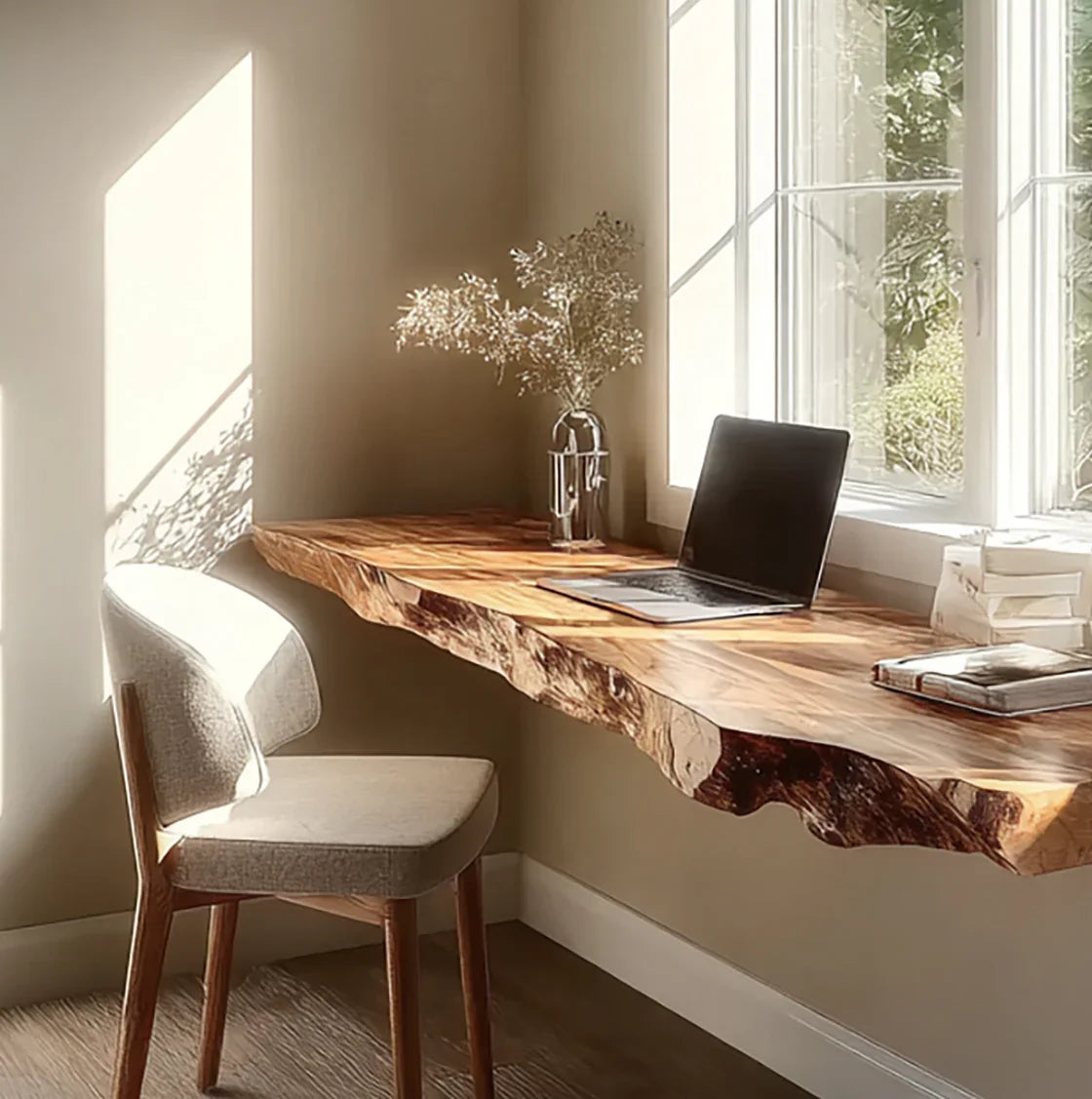
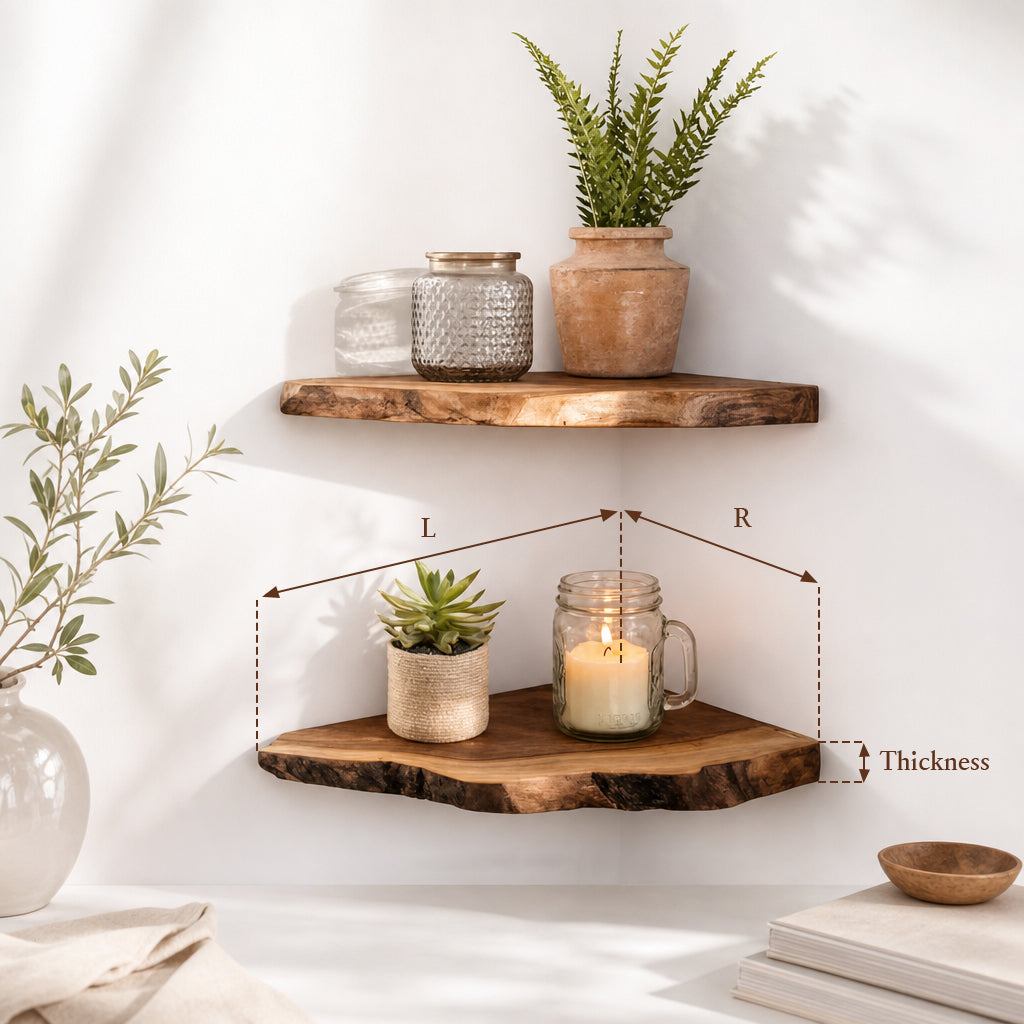
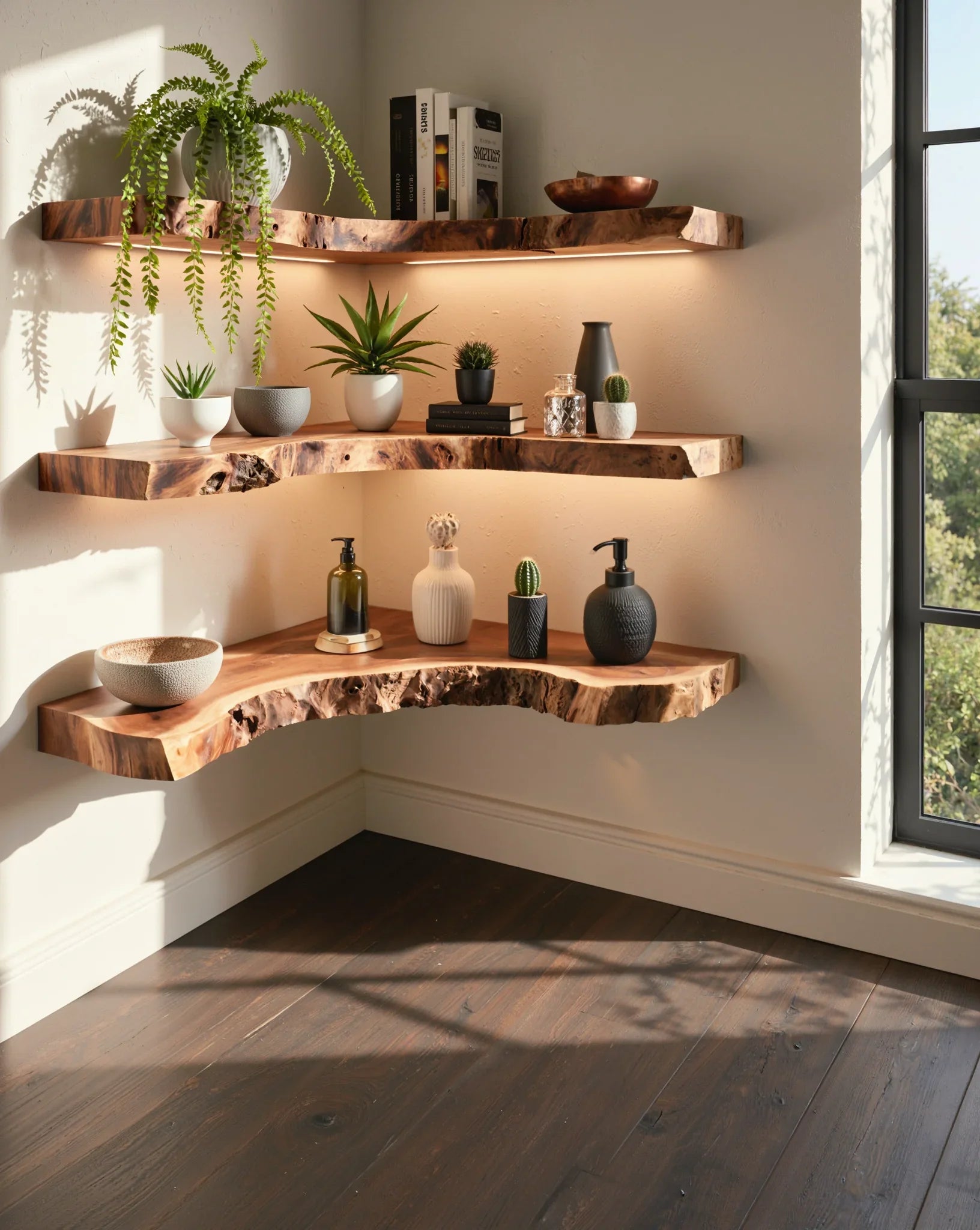
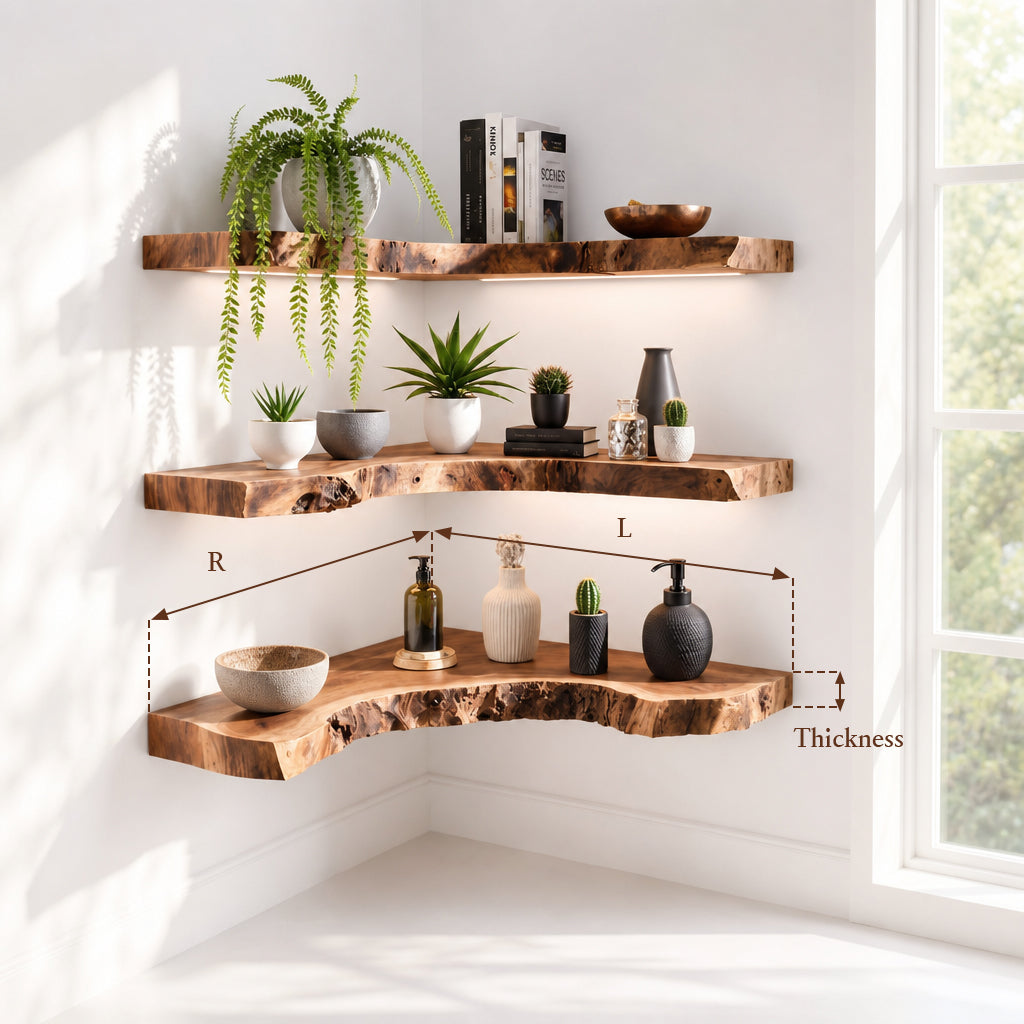
Ashdeco's take: Our Organic Live Edge Solid Wood Floating TV Shelf is the extreme minimalist version - wall-mounted, no legs, just a solid walnut slab. Works beautifully when you want the TV to float and nothing else competes visually.

Media Console: The Middle Ground
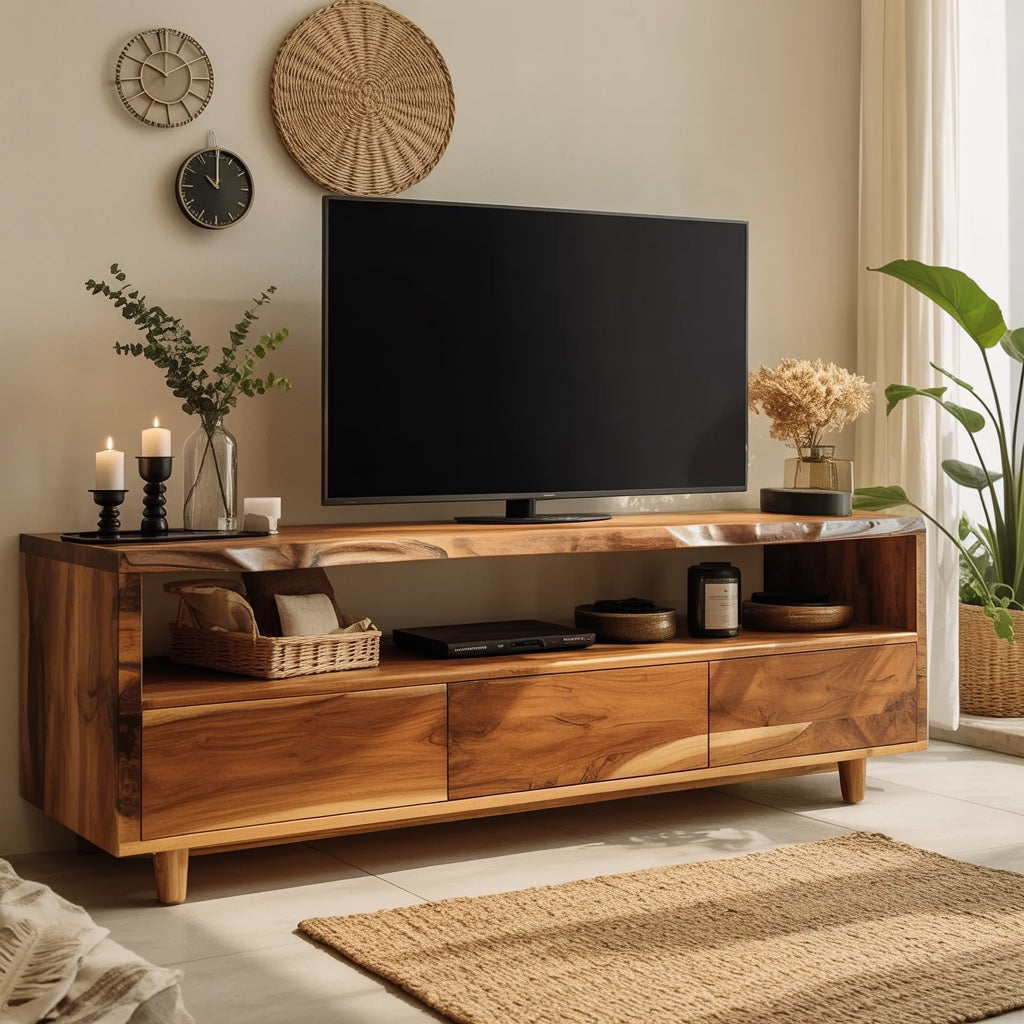
A media console is a low-profile cabinet - think of it as a dresser for your electronics. It has doors, drawers, or both, with open shelves mixed in for devices that need remote control signals or airflow.
What it looks like:
- Cabinet-style body, 20–26" tall
- Combination of closed storage (doors/drawers) and open shelving
- Typically 55–80" wide, 16–20" deep
- Cable management holes or channels in the back
Who it's for:
- You have multiple devices (gaming console, cable box, streaming stick, soundbar)
- You want cables and clutter hidden behind doors
- You have a medium-to-large living room
- You want the TV area to look organized without a massive wall unit
The key difference from a TV stand:
A TV stand is a surface. A media console is a piece of furniture with intentional storage. The console integrates your electronics into the room's design instead of leaving them exposed.
The console is designed to look good as a standalone piece of furniture - even without a TV on top. That's the real difference from a TV stand: a console reads as furniture first, TV surface second.
What to check before buying:
- Door clearance: Can doors open fully with a soundbar in front?
- Shelf adjustability: Can you remove shelves for taller components?
- Ventilation: Do enclosed sections have back panels with wire cutouts?
- Weight capacity: Solid hardwood tops hold 150–300+ lbs; particle board tops sag at 80 lbs
Ashdeco's take: The Handcrafted Arched Solid Wood TV Stand & 2-Drawer Media Console is a typical media console design - closed drawers for remotes and accessories, open shelf for devices, sculptural arch motif for visual interest.

Entertainment Center: The Full Wall Solution
An entertainment center is the largest option - a multi-section unit that surrounds the TV with shelves, cabinets, and display areas. Think of it as a built-in look without the built-in price.
What it looks like:
- Tall - often 50–80" high, reaching toward the ceiling
- Wide - 72–96"+ to fill an entire wall
- Multiple sections: center TV area, side towers, top bridge, bottom cabinet
- Mix of open shelving, glass-door display cabinets, and closed storage
Who it's for:
- You have a dedicated media room or large living room
- You own extensive media collections (vinyl, books, decor)
- You want maximum storage without custom built-ins
- You have a large TV (75"+) and want proportional furniture
The trade-off:
Entertainment centers dominate a wall. In a small or medium room, they feel overwhelming. They're also harder to move - most come in 3–5 pieces that bolt together, but it's still a commitment.
Many design-conscious homeowners have moved away from full entertainment centers toward simpler console setups, especially in rooms where the TV isn't the sole focal point. A low media cabinet to hold the components, paired with wall-mounted art or shelving, has become the more common combination.
When an entertainment center still makes sense:
- You have a dedicated home theater room
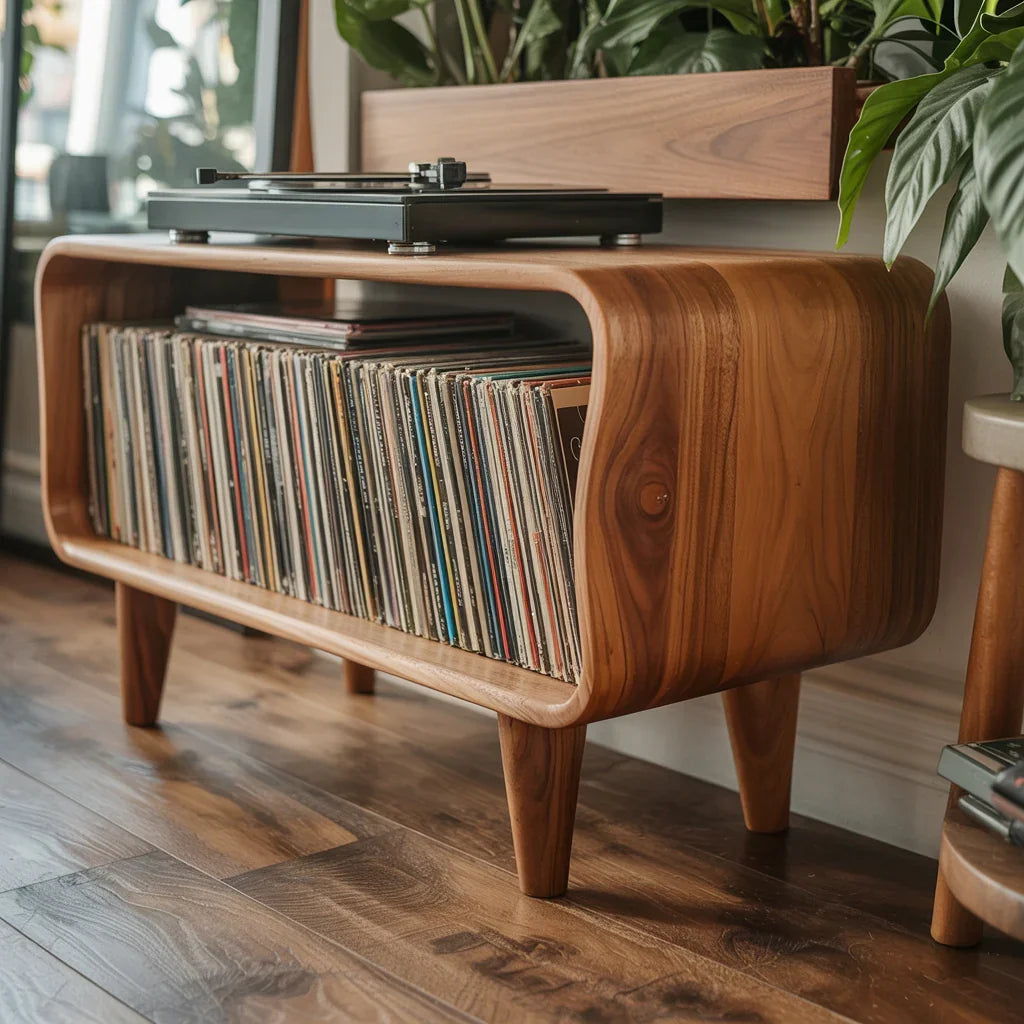
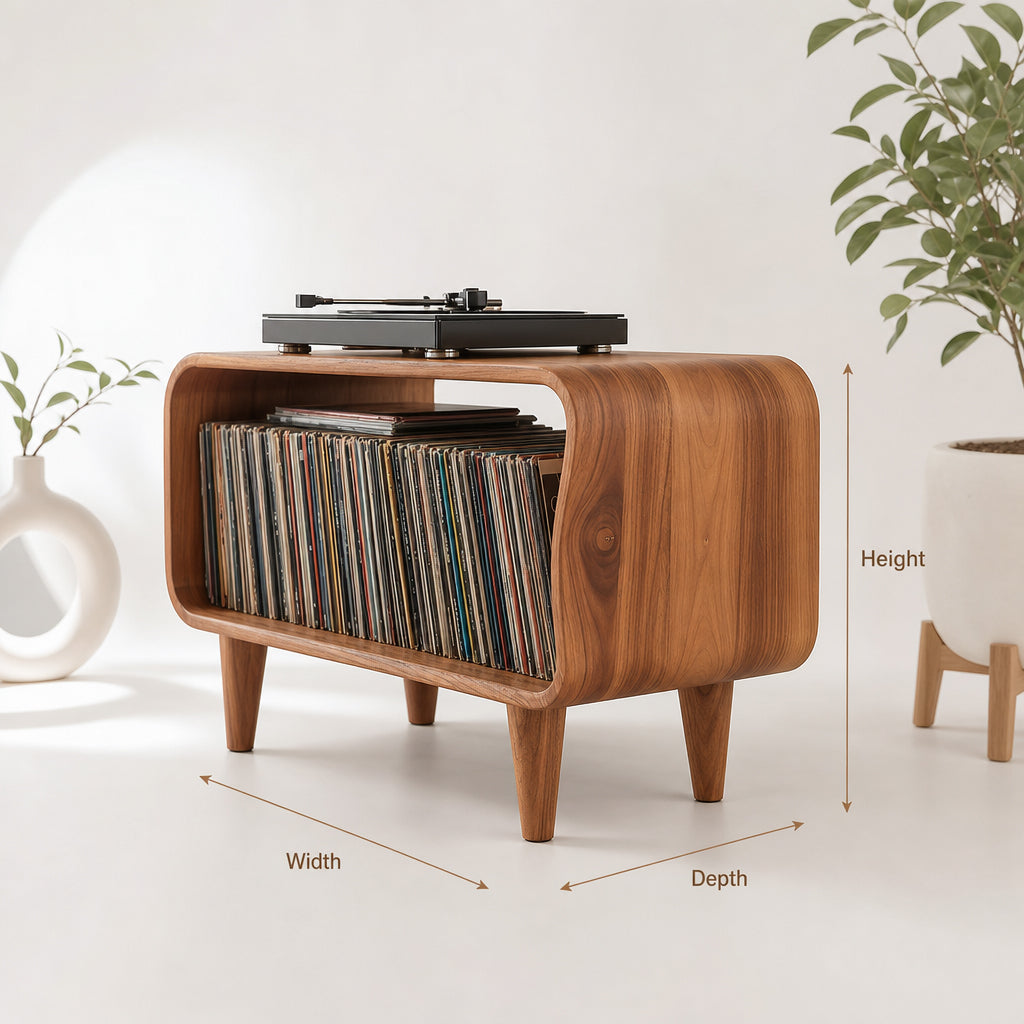
- You collect vinyl records and need display + storage (check our record player stand guide for turntable integration)
- You want to replace custom built-ins without the renovation cost

The 3-Question Filter: Which One Do You Need?
Question 1: How many devices do you need to store?
- 0–2 devices (TV + soundbar) → TV stand
- 3–6 devices (TV + console + cable box + streaming + soundbar + accessories) → Media console
- 7+ devices or extensive collections → Entertainment center
Question 2: How much wall space do you have?
- Under 8 feet → TV stand or compact media console
- 8–12 feet → Media console (most versatile)
- Over 12 feet → Entertainment center or large media console + flanking shelving
Question 3: Do you want devices hidden or displayed?
- Hidden → Media console (doors) or entertainment center (cabinets)
- Displayed → TV stand (open) or entertainment center (open shelving)
- Mix of both → Media console with combination of doors + open shelves

Material Matters Across All 3 Types
Whether you choose a stand, console, or center, the material determines how long it lasts:
| Material | Lifespan | Weight Capacity | Price |
|---|---|---|---|
| Solid hardwood (oak, walnut, acacia) | 20–50+ years | 150–300+ lbs | $$$$ |
| Engineered wood (plywood, MDF) | 8–15 years | 80–150 lbs | $$ |
| Particle board | 3–7 years | 50–80 lbs | $ |
Solid wood furniture is one of the few categories that reliably qualifies as a "buy it for life" purchase - but only if it's genuine hardwood. "Solid wood" on a listing doesn't guarantee durability by itself: pine and other softwoods dent easily under the weight of electronics. For TV furniture specifically, hardwood species like oak, walnut, or acacia are what actually hold up over decades.
For a detailed comparison, see our solid wood vs particle board TV cabinet guide.
Quick Decision Matrix
| If you... | Choose | Why |
|---|---|---|
| Want minimal visual footprint | TV stand | Clean lines, open space |
| Have 4+ devices to hide | Media console | Doors conceal clutter |
| Need to fill a large wall | Entertainment center | Maximum presence + storage |
| Live in a small apartment | TV stand or compact console | Won't overwhelm the room |
| Want to wall-mount the TV | TV stand or floating shelf | Console below for devices only |
| Have vinyl + gaming + streaming | Media console or entertainment center | Storage + display for collections |
| Want furniture that lasts 20+ years | Solid wood (any type) | Material > style for longevity |
Browse by Type
- TV Stands & Floating Shelves: Organic Live Edge Floating TV Shelf - minimalist, wall-mounted
- Media Consoles: Handcrafted Arched Solid Wood TV Stand & 2-Drawer Console - storage + style
- Full Collection: All TV Cabinets - stands, consoles, and sculptural pieces
FAQ
What is the difference between a TV stand and a media console?
A TV stand is an open surface with minimal storage; a media console is a low cabinet with doors, drawers, and shelves for hiding devices and cables.
Is a media console the same as an entertainment center?
No. A media console is a single low cabinet (20–26" tall). An entertainment center is a tall, multi-section wall unit (50–80"+ tall) with surrounding shelves and cabinets.
Can I use a TV stand without hiding cables?
Yes - a TV stand works best when you have few devices and can route cables through the stand's legs or behind a wall-mounted TV. For more devices, a media console with cable management is cleaner.
Which is better for a small living room: TV stand or media console?
A TV stand takes up less visual space. A compact media console (under 60" wide) works too if you need hidden storage. Avoid entertainment centers in rooms under 200 sq ft.