Floating Bar Table or Freestanding: Which Fits Your Space?
A floating bar table gives you bar-height seating without using floor space. A freestanding bar table offers more freedom to move.
The difference affects more than appearance. It changes installation, wall requirements, floor space, and room flexibility.
A wall-mounted design can help in a narrow kitchen, small apartment, or tight corner. A freestanding design offers easier repositioning.
For the full type breakdown, see the bar table buying guide. For height and stool pairing, see the bar table height guide.

Quick Answer
- Choose a floating bar table when: floor space is the main constraint. This works well in narrow kitchens, small apartments, and tight corners.
- Choose a freestanding bar table when: you want easier movement or room flexibility. It also suits renters who cannot modify walls.
- Check the mounting system: floating tables depend on the wall connection for support. The system must suit the table size and expected load.
- Consider the complete load: include the table, dishes, drinks, and normal use. Do not rely only on the table's empty weight.
- Rule of thumb: verify the wall and mounting requirements before choosing a floating design. Otherwise, a freestanding table may be simpler.
Floating Bar Table: What It Solves
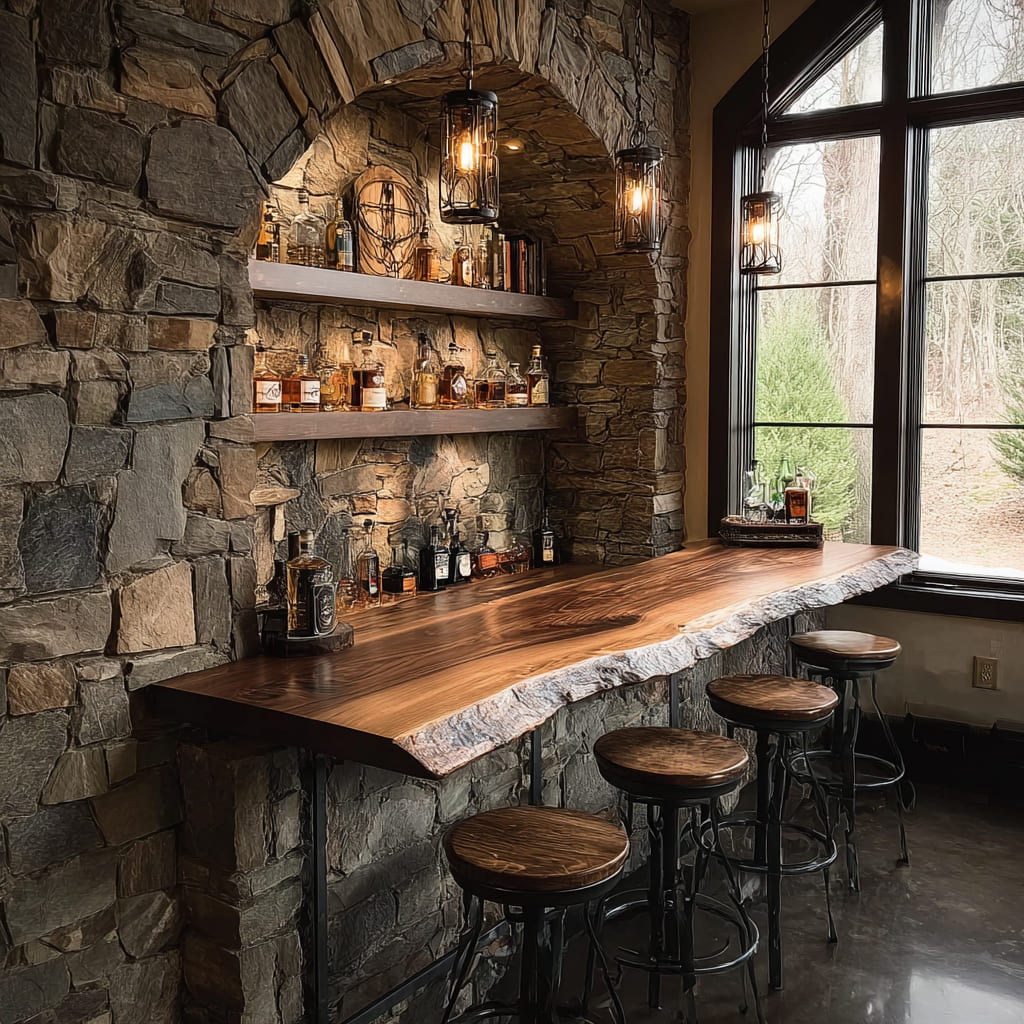
A floating, wall-mounted bar table provides a standing-height surface without floor-standing legs. This can help preserve walking space in compact rooms.
It can work well in narrow kitchens, small apartments, and basement corners. The open floor area can also make a compact room feel less crowded.
The wall connection becomes important because there are no floor-standing legs. The table weight and everyday use both affect the installation.
Check the hardware requirements and rated load for the specific table. Do not assume a standard shelf bracket provides enough support.

Freestanding Bar Table: What It Solves
A freestanding bar table stands on its own legs. It does not require wall mounting and can usually be repositioned.
This can suit renters who cannot modify their walls. It also works well when you expect to change the room layout later.
A freestanding table can stand away from the wall. It can also help separate two areas, such as a kitchen and living space.

Floating Bar Table Installation: What Actually Holds It Up
A floating bar table supports more than the static weight of its tabletop. People may lean against it during normal use.
Drinks, dishes, and other items also add weight. These factors make the mounting system and wall construction important.
Check the Wall and Mounting Requirements
Mount into suitable wall framing when the mounting system requires it. The hardware must suit the table size and expected load.
Drywall alone may not provide enough support for a large tabletop. Follow the requirements specified for the table and mounting hardware.
Do not treat a decorative shelf bracket as equivalent to a table mounting system. The two applications can have very different load demands.
If mounting points do not align with suitable framing, follow the specified installation method. Do not improvise with hardware designed for lighter shelves.
Match Tabletop Depth to the Mounting System
Do not extend the tabletop beyond the mounting system's design limits. A deeper surface can create more leverage on the wall connection.
Check the bracket or mounting system specifications before installation. Confirm that they support the tabletop's actual dimensions.
Check the Weight Rating Against Real Use
Consider the complete expected load, not only the empty table weight. Include dishes, drinks, everyday items, and normal pressure.
Use the manufacturer's stated mounting requirements and load rating when available. Do not assume the wall connection supports an unspecified weight.

Floating vs. Freestanding: Side-by-Side
| Factor | Floating bar table | Freestanding bar table |
|---|---|---|
| Floor space used | No floor-standing legs | Full footprint of the table and legs |
| Wall requirement | Requires suitable mounting hardware and wall construction | None |
| Wall alteration required | Usually yes | No |
| Can be repositioned later | Usually not without reinstalling | Yes |
| Best suited to | Narrow kitchens, small apartments, and tight corners | Flexible layouts, renters, and spaces away from walls |
| Load path | Through the wall mounting system | Through the legs into the floor |
When to Choose a Floating Bar Table
- The room has limited floor space. This includes narrow kitchens, small apartments, and tight basement corners.
- You can meet the table's mounting requirements for the chosen wall location.
- You want the table fixed in one location. You do not need frequent repositioning.
- You want to keep the floor underneath visually and physically open.

When to Choose a Freestanding Bar Table
- You're renting and cannot or do not want to modify the wall.
- You want to move the table when you rearrange the room.
- The table needs to stand away from a wall.
- You want the table to help separate two areas of a room.
- You cannot verify that the wall and mounting system are suitable.

Common Mistakes
Choosing a floating bar table without checking the wall requirements. Confirm the wall construction, mounting points, and hardware requirements first.
Assuming any floating shelf bracket can handle bar table use. A shelf bracket may not suit repeated leaning or heavier loads.
Choosing freestanding when floor space is the bigger problem. A freestanding table still needs space for its legs and full footprint.
Ignoring tabletop depth and mounting support. A deeper tabletop can create more leverage on the wall connection.
Check the mounting system specifications for the actual tabletop dimensions. Do not judge support by appearance alone.
Ashdeco Floating and Freestanding Bar Tables
Ashdeco's collection includes wall-mounted and floor-standing solid wood options. Each style suits different room layouts and installation needs.
For a floating setup, see the Live Edge Solid Wood Floating Bar Table or the Live Edge Wall-Mounted Bar Table.
For a freestanding setup, options include the Handcrafted Live Edge Solid Wood Bar Table and Rustic Live Edge Solid Wood Home Bar Table & Kitchen Island with Storage Shelves.
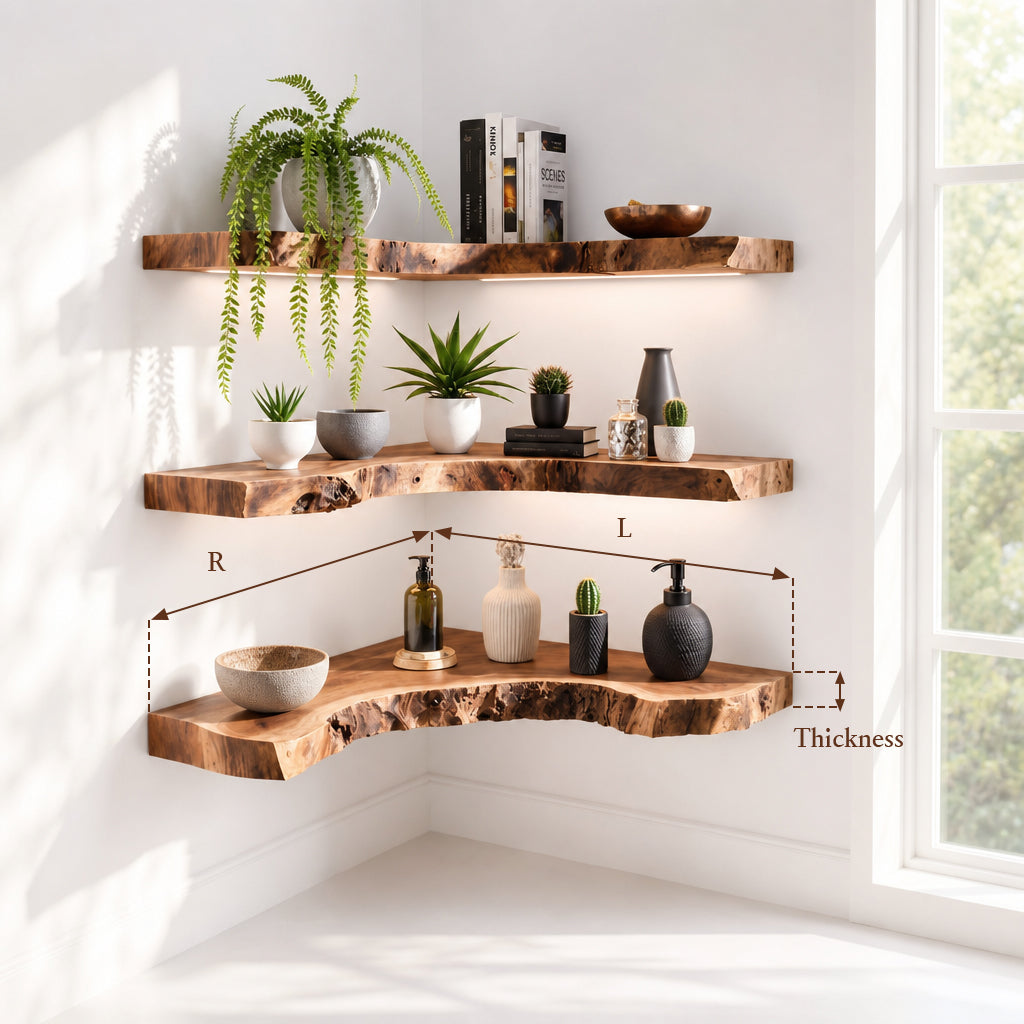
Browse the full range in bar tables and bar floating shelves. The latter suits a shelf-style setup rather than a full standing-height table.
FAQ
Is a floating bar table strong enough to lean on?
It can be, but support depends on the mounting system and wall construction. The rated load also matters. Install the table according to the manufacturer's requirements. Do not assume every wall bracket can support repeated leaning.
Can I install a floating bar table myself?
Installation depends on the mounting system, wall construction, and specified hardware. Some installations may be suitable for experienced DIY users. Follow the manufacturer's installation requirements. If the wall does not meet them, use the recommended installation method.
Do I need special brackets for a floating bar table?
Generally, yes. A bar table can experience more repeated loading than a decorative shelf. Use the mounting system specified for the table. It should match the table's dimensions and expected load.
What happens if a floating bar table isn't mounted into suitable wall framing?
The installation may not provide enough support. This matters more with deeper or heavily loaded tabletops. The correct fastener depends on the wall construction and mounting hardware. Do not assume drywall anchors suit every installation.
Is a freestanding bar table easier for renters?
Usually. A freestanding table does not require wall mounting or drilling. It can suit leases that limit wall modifications. You should still consider the table footprint and floor protection.
Can a floating bar table double as a room divider?
Not typically. A floating bar table attaches to a wall and stays in a fixed position. A freestanding table offers more flexibility between two areas. It can help define a kitchen and living space.
If floor space is the main constraint, a floating bar table keeps the area underneath open. If flexibility matters more, choose a freestanding design.
Either way, check the table dimensions and installation requirements before choosing. Consider the intended use and the room layout as well.