
Floating Bathroom Vanities Design
1. Why a Floating Bathroom Vanity Makes Every Bathroom Feel Bigger
A floating vanity is wall-mounted - no legs, no base touching the floor. That gap between the vanity and the floor creates an illusion of more space, makes cleaning effortless, and gives modern bathrooms the clean, minimal look that traditional floor-standing vanities can't match.
a. Solid Wood, Not Hollow MDF
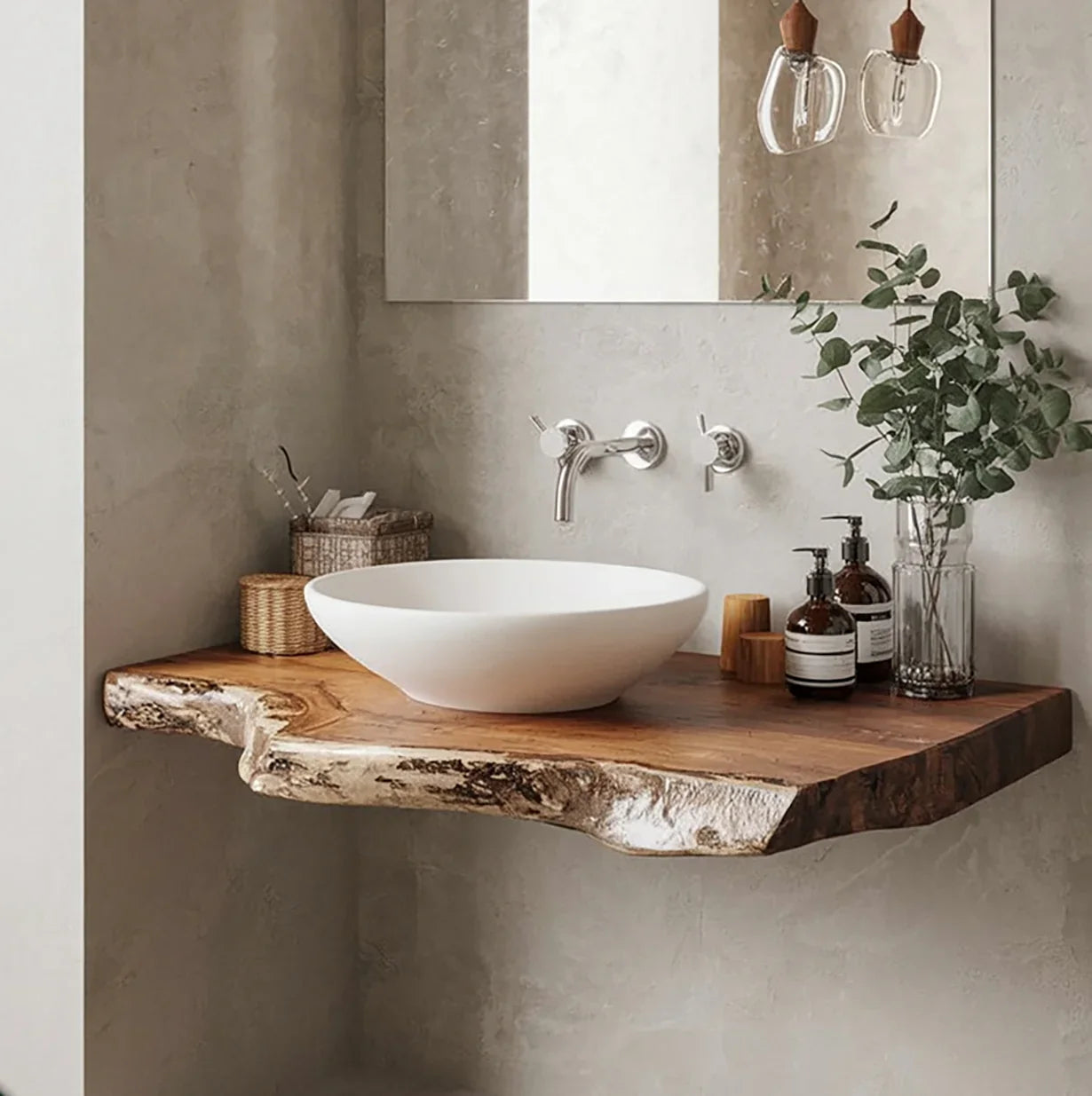
Most floating vanities on the market are made from MDF or particle board wrapped in a thin moisture-proof film that peels after a few years of bathroom humidity. Ashdeco floating bathroom vanities are handcrafted from solid hardwood - walnut, teak, acacia, and reclaimed wood - finished with moisture-resistant sealant designed for wet environments. Real wood that handles steam, splashes, and daily bathroom use.
b. Handcrafted by Vietnamese Artisans
Every floating vanity is built by hand - live edge details preserved, surfaces hand-sanded, and each piece matched to the natural character of the wood slab. Our artisans shape the vanity to follow the wood's grain and organic contour. No two vanities are identical.
c. The Space-Saving Advantage
A floating vanity frees up 8"-12" of floor space below. That space means easier mopping, room for a small basket or scale underneath, and a visual lightness that makes even a small bathroom feel open and airy. In tight half-baths and powder rooms, this difference is dramatic.
2. Floating Vanity Styles We Offer
a. Live Edge Floating Vanities

The natural outer edge of the wood slab is preserved-organic curves and raw character mounted to the wall as a vanity shelf or countertop. A vessel sink sits on top, and the live edge wraps around it for a sculptural, spa-like effect. This is our most popular style - each piece is shaped by the tree it came from.
b. Farmhouse Floating Vanities
Reclaimed and rustic solid wood with visible grain, natural knots, and warm, lived-in character. Some include open shelving below for towels and baskets, others feature closed storage with drawers. Farmhouse style with modern wall-mounted convenience.
c. Floating Vanities with Drawers
Solid wood vanities with built-in drawers for toiletries, makeup, hair tools, and cleaning supplies. Wall-mounted with hidden storage - clean exterior, organized interior. The drawers add function without sacrificing the floating silhouette.
d. Floating Vanity Shelves
Simple, minimalist: a solid wood shelf mounted to the wall, designed to support a vessel sink on top and provide a surface for soap, lotion, and a small plant. No drawers, no cabinet-just the wood, the sink, and open air. The most space-efficient option for small bathrooms and powder rooms.
e. Organic Carved Floating Vanities
Hand-sculpted storage shelves with carved organic details - flowing curves, wave-like forms, and sculptural character built into the vanity structure. These pieces blur the line between bathroom furniture and functional art.
3. How to Choose the Right Floating Vanity Size
• Width: 24" for powder rooms and half-baths. 30"-36" for standard guest bathrooms. 48"-60" for master bathrooms. 60"-72" for double-sink setups. Measure your wall space and leave at least 4" on each side for visual balance.
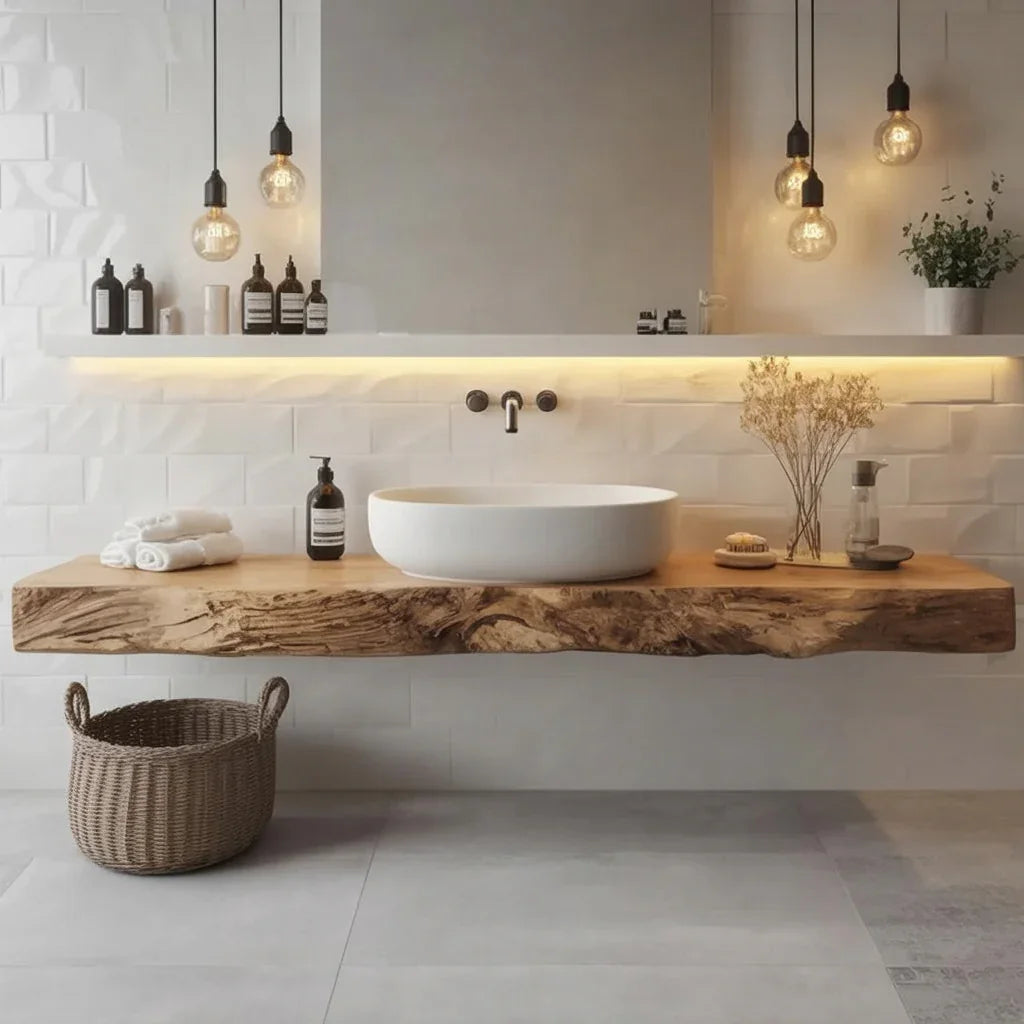
• Depth: 18"-22" is standard. Go shallower (14"-16") in tight powder rooms where every inch of walkway matters. Deeper (22"+) only if the bathroom is spacious enough.
• Height (mounting): Mount the vanity top at 32"-36" from the floor. Standard is 34" - comfortable for most adults. In kids' bathrooms, mount at 30"-32". Leave at least 8" of clearance between the bottom of the vanity and the floor.
• Sink compatibility: Vessel sinks (sit on top) need a vanity surface at least 4" wider than the sink diameter on each side. Undermount sinks need a vanity with sufficient depth and a pre-cut or custom-cut opening.
4. Floating vs. Traditional vs. Driftwood Vanities
• Floating vanity (this collection): Wall-mounted, floor completely clear. Modern, minimal look. Easier cleaning. Makes small bathrooms feel larger. Requires wall studs or heavy-duty anchors for mounting.
• Traditional vanity: Floor-standing with legs or a base cabinet. More storage (full cabinet below). No wall mounting required. Best for larger bathrooms where floor space isn't a concern.
• Driftwood vanity: Sculptural vanities made from natural driftwood and reclaimed wood with the most organic, raw character. Available in both floating and freestanding configurations. For people who want their bathroom vanity to be a true nature-inspired statement piece.
Browse all styles in our main bathroom vanities collection.
5. Complete Floating Vanity Bathroom Setup
• Mirror above: Mount a mirror 4"-6" above the vanity surface. A round mirror softens the angular lines; a rectangular mirror matches the vanity width for a more structured look.
• Floating shelves alongside: Floating shelves for bathroom mounted beside or above the vanity for extra towel storage, toiletries, and decorative plants. Match the wood tone to the vanity for a cohesive look.
• Shower bench nearby: A shower bench in matching wood completes the spa-like bathroom aesthetic-teak vanity paired with a teak shower bench creates a unified warm-wood bathroom.
• Lighting: Sconces mounted at eye level on either side of the mirror provide even, shadow-free lighting. Avoid a single overhead light-it creates unflattering shadows at the vanity.
• Basket below: The open space beneath the floating vanity is perfect for a woven basket holding extra towels, toilet paper, or a small step stool for kids.
6. Installation & Care
a. Installation
• Floating vanities MUST be mounted into wall studs or heavy-duty toggle bolts rated for the vanity's weight plus the sink and water. A loaded vanity can weigh 80-120 lbs.
• Use a level - an unlevel floating vanity is far more noticeable than an unlevel floor-standing one because the floor gap reveals any tilt.
• For plumbing, the drain and supply lines need to come out of the wall (not the floor) for a clean look. If converting from a floor-standing vanity, a plumber can reroute the lines-typically a half-day job.
• Two people required for mounting. Mark the stud locations, mount the bracket, then hang the vanity.
b. Care
• Daily: Wipe water splashes from the surface after use. This takes 5 seconds and prevents water marks from developing over time.
• Weekly: Clean with mild soap and a damp cloth. Dry immediately. No abrasive cleaners or bleach.
• Every 3-6 months: Apply teak oil or food-safe wood sealant. Bathroom vanities get more moisture exposure than other furniture - more frequent oiling keeps the wood protected. Pay extra attention around the sink area.
• Ventilation: Run the bathroom exhaust fan during and after showers. Proper ventilation is the single best thing you can do for any wood bathroom furniture.
7. Contact Information
Contact Ashdeco,
Email: support@ashdeco.com
Address 1: 157 Elder Ave, Bergenfield, NJ 07621
Address 2: 1011 Roundabout Rd, Martinsville, VA 24112
Support Hours: Monday to Friday, 8:00 AM to 8:00 PM (EST)