
Driftwood Bathroom Vanities Design
1. What Makes a Driftwood Bathroom Vanity Different
A driftwood bathroom vanity isn't built from flat boards cut to size in a factory. It's shaped around natural wood - reclaimed tree trunks, root systems, and weathered timber that carry decades of character in their grain, knots, and organic curves. These vanities sit at the intersection of functional bathroom furniture and sculptural art. Every piece at Ashdeco is handcrafted from real solid wood - never MDF, particle board, or laminate with a printed "wood-look" finish.
a. Reclaimed & Sustainable
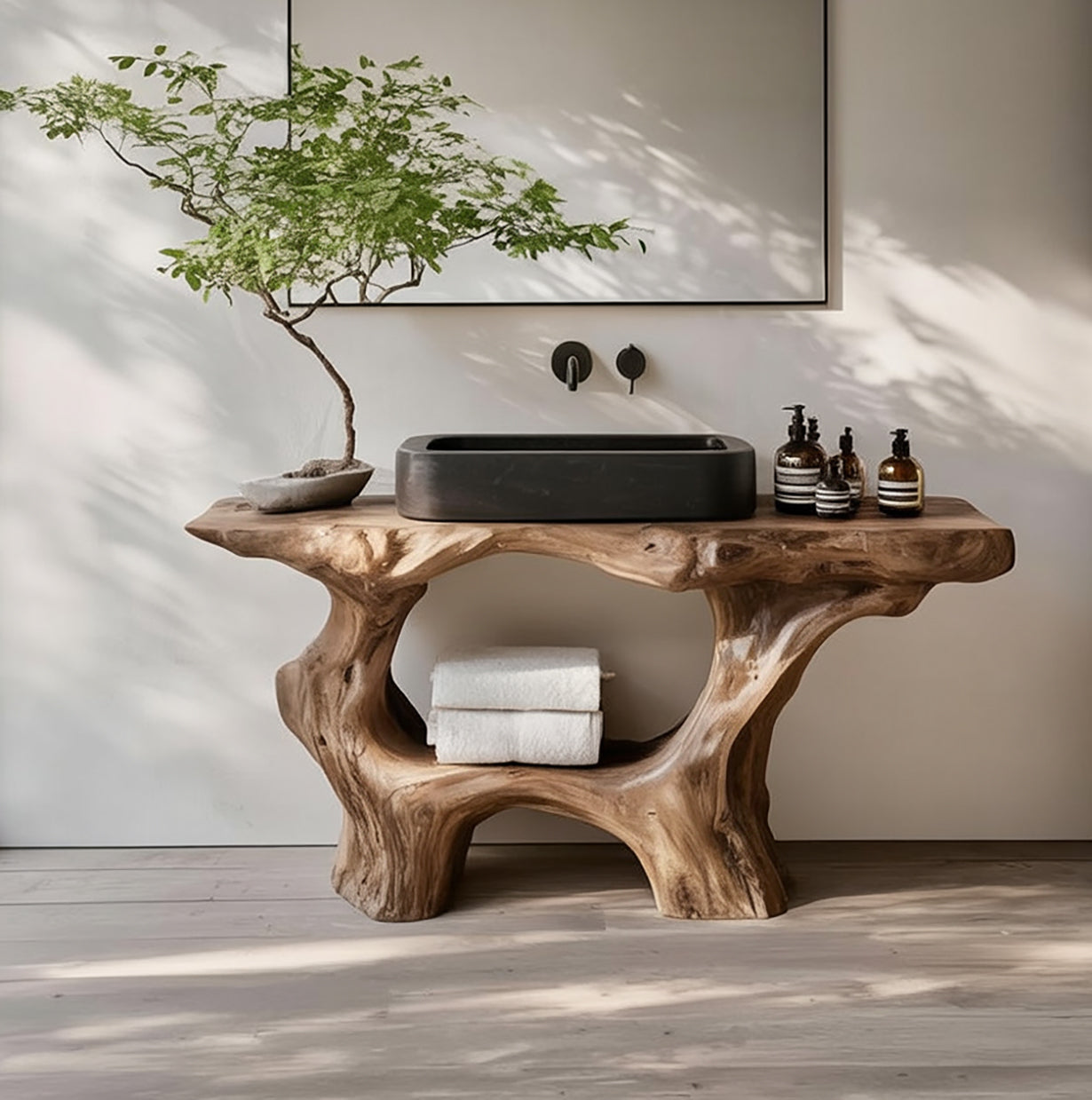
The wood used in our driftwood bathroom vanities comes from naturally fallen trees, salvaged timber, and reclaimed sources. No healthy trees are cut down for these pieces. Each trunk and root system is cleaned, kiln-dried to eliminate insects and bacteria, sanded by hand, and sealed with multiple coats of waterproof finish. Reclaimed wood that's as hygienic and durable as any new hardwood - with far more character.
b. Handcrafted by Vietnamese Artisans
Our artisans don't just assemble parts - they study each piece of wood, follow its natural shape, and build the vanity around the wood's own character. Tree root bases are cleaned and shaped to stand level. Live edge countertops are sanded and sealed while preserving the raw outer edge. The result is a vanity that looks like it grew into its form rather than being manufactured.
c. One of a Kind - Every Single Piece
Because driftwood and tree trunk wood is inherently unique-different grain patterns, knot placement, root shapes, and weathering marks-no two vanities are identical. When you buy a driftwood vanity from Ashdeco, you're getting a piece that will never be exactly replicated. It's bathroom furniture with the character of a gallery piece.
2. Driftwood Vanity Styles We Offer
a. Tree Root Base Vanities
A solid wood countertop - often live edge - supported by a sculptural tree root or trunk base. The root system becomes the legs and structure of the vanity, creating an organic silhouette that's dramatic and grounding. Vessel sinks sit on top of the live edge surface. This is our most statement-making style-the kind of piece guests photograph.
b. Live Edge Driftwood Vanities

Weathered wood slabs with the natural outer edge preserved - sun-bleached tones, raw texture, and coastal character. Mounted on simple legs or a minimal base frame to let the wood speak for itself. Lighter in tone and feel than the tree root style - perfect for coastal, Scandinavian, or beach house bathrooms.
c. Farmhouse Rustic Vanities
Reclaimed barnwood and rustic solid wood with visible grain, natural knots, and warm, aged character. Some feature open shelving below for towels and baskets, others have cabinet doors or drawers. The farmhouse style brings a cozy, lived-in warmth that pairs beautifully with shiplap walls, vintage fixtures, and matte black hardware.
d. Corner Driftwood Vanities
Designed specifically for corner placement - these vanities use the often-wasted corner space in small bathrooms, powder rooms, and half-baths. A triangular or angled live edge countertop with a vessel sink, supported by a reclaimed wood base. Maximum function in minimum footprint, with all the rustic character of a full-size driftwood vanity.
e. Floating Driftwood Vanities
Wall-mounted reclaimed wood vanities that combine the rustic, weathered character of driftwood with the modern, space-saving benefits of a floating installation. The floor stays completely clear - easier cleaning, a sense of openness, and that signature floating look. For those who want the best of both worlds: organic texture mounted on a clean, modern wall.
3. Wood Types Used in Our Driftwood Vanities
• Teak: The gold standard for bathroom wood. Natural oils repel water and resist mold without chemical treatment. Rich golden-brown tone that deepens with age. Teak driftwood vanities handle daily splashes, steam, and humidity better than any other wood.
• Walnut: Deep, rich dark tones with dramatic grain patterns. Excellent durability and natural resistance to warping. Our walnut vanities bring a sophisticated, moody warmth to bathrooms - especially striking against white tile or marble.
• Acacia: Bold, two-tone grain with striking contrast between heartwood and sapwood. Hard, dense, and naturally water-resistant. Acacia driftwood vanities have the most dramatic visual character of any wood we offer.
• Reclaimed Mixed Hardwood: Salvaged wood from old structures, naturally fallen trees, and timber with decades of weathering. Each piece carries its own history - nail holes, patina, sun bleaching, and time-worn texture that can't be artificially recreated.
4. Driftwood vs. Floating vs. Traditional Vanities
• Driftwood/tree trunk vanity (this collection): Freestanding with a natural wood base - sculptural, organic, rustic. The vanity itself is a statement piece. Prioritizes artistry and one-of-a-kind character. Best for bathrooms where you want a nature-inspired focal point.
• Floating vanity: Wall-mounted, floor completely clear. Modern, minimal, space-saving. Best for small bathrooms and contemporary designs where clean lines matter most.
• Traditional vanity: Floor-standing with a cabinet base. Maximum storage with drawers and doors. No wall mounting required. Best for larger bathrooms where practicality and storage are the top priorities.
Browse all styles in our main bathroom vanities collection.
5. How to Choose the Right Driftwood Vanity
• Bathroom size: Tree root base vanities have a larger footprint due to the organic spread of the root system - best for master bathrooms and spacious guest baths. For small bathrooms and powder rooms, choose a corner driftwood vanity or a floating driftwood style.

• Sink type: Vessel sinks (sitting on top of the countertop) are the most common pairing-they showcase the live edge surface around the sink. Undermount sinks work with thicker slab countertops where a cutout can be made without compromising the wood's structural integrity.
• Style match: Coastal or beach house → lighter driftwood with sun-bleached tones. Rustic cabin or farmhouse → darker reclaimed barnwood with visible knots. Modern organic → clean-lined tree root base with a polished vessel sink. Industrial → reclaimed wood paired with black metal fixtures.
• Width: 24"-30" for powder rooms. 36"-48" for guest bathrooms. 48"-60" for master bathrooms. 60"-72" for double-sink setups. Tree root bases may extend slightly wider than the countertop - measure the base footprint, not just the top.
• Plumbing: Freestanding driftwood vanities use floor plumbing (drain and supply lines come up from the floor or through the wall behind the base). The organic shape of the base often conceals plumbing naturally - but confirm clearance before ordering.
6. Styling Your Driftwood Vanity Bathroom
• Mirror: A round or irregularly shaped mirror complements the organic curves of a driftwood vanity. Avoid harsh rectangular frames that fight the natural aesthetic - choose frameless, wood-framed, or rope-framed mirrors.
• Floating shelves: Floating shelves for bathroom in matching wood tone mounted beside or above the vanity for towels, candles, and small plants. This extends the natural wood presence throughout the bathroom.
• Shower bench: A shower bench in matching teak or reclaimed wood creates a spa-likecohesion - the same wood character inside the shower and at the vanity.
• Vessel sink: Stone vessel sinks (marble, river stone, petrified wood) pair beautifully with driftwood bases - natural material on natural material. Ceramic vessel sinks in matte white or matte black provide clean contrast.
• Fixtures: Matte black, brushed brass, or oil-rubbed bronze hardware and faucets complement the warmth of natural wood. Avoid chrome - it reads too cold and clinical against organic driftwood texture.
• Lighting: Warm-toned sconces or pendant lights on either side of the mirror. The warm light enhances the wood grain and creates a cozy, inviting atmosphere. Avoid cool white LED - it flattens the wood's natural character.
7. Care & Maintenance
• Daily: Wipe water splashes and toothpaste from the countertop surface after use. Takes seconds, prevents water marks and buildup over time.
• Weekly: Clean with a damp cloth and mild soap. Dry immediately - don't let water pool on any surface, especially in natural crevices and textured areas of the driftwood base.
• Every 3-6 months: Apply teak oil (for teak) or food-safe wood sealant (for walnut, acacia, reclaimed wood). Pay extra attention to the countertop area around the sink where water exposure is highest. The base typically needs less frequent treatment since it's not in direct contact with water.
• Ventilation: Run the bathroom exhaust fan during and 15-20 minutes after showers. Good ventilation is the single most important thing you can do to protect any wood bathroom furniture from moisture damage.
• Tree root base: The root base has more texture and crevices than a smooth countertop. Dust occasionally with a soft brush to prevent buildup in textured areas. A quick wipe with a barely damp cloth keeps it clean without over-moisturizing.
8. Contact Information
Contact Ashdeco,
Email: support@ashdeco.com
Address 1: 157 Elder Ave, Bergenfield, NJ 07621
Address 2: 1011 Roundabout Rd, Martinsville, VA 24112
Support Hours: Monday to Friday, 8:00 AM to 8:00 PM (EST)