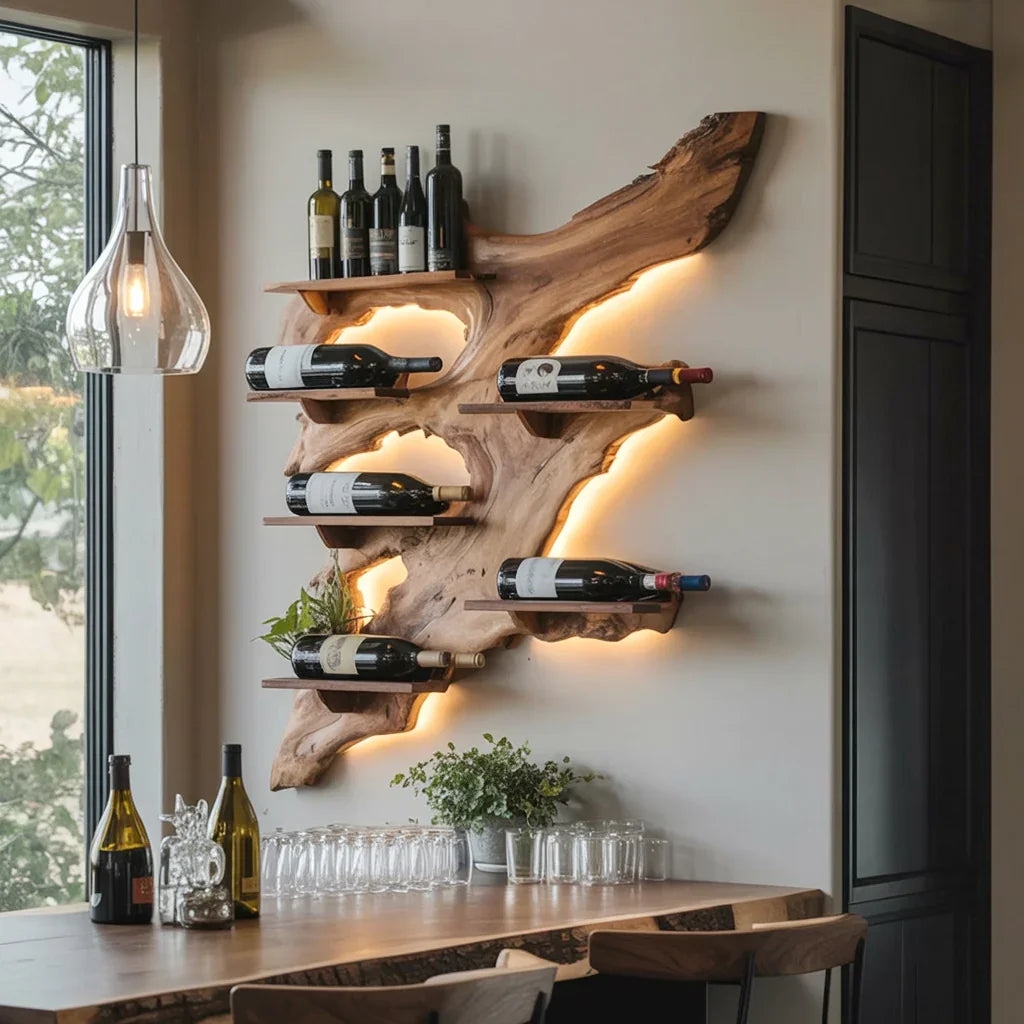
Wood Wine Rack: 4 Types & 7 Rules for Bottle Storage
A wood wine rack is a storage piece made from solid wood designed to hold wine bottles horizontally (or at an angle) so the cork stays moist and the wine ages properly. People search it because a cardboard box on the kitchen counter keeps wine warm, turns the bottles upright, and looks like a garage sale.
A wooden wine holder only works if the bottle diameter fits the opening, the rack holds the bottle at the right angle for cork contact, the wood does not transfer odor to the cork, and the piece is stable enough that removing one bottle from the bottom does not collapse the rest. If any of those fail, you bought bottle-shaped decoration.
This is the buying filter. For countertop options, see our countertop wine holder guide. For wall-mounted ideas, see wall-mounted wine rack ideas. For bar shelves to pair with a rack, see bar floating shelves.
As a handmade furniture brand, we build sculptural solid wood wine holders - tree trunk racks with glass holders, live edge wall-mounted displays, Christmas tree shapes, and mid-century countertop pieces - all from solid hardwood by Vietnamese artisans. See our wooden wine rack buying guide for the full material breakdown.

Standard Wine Bottle Dimensions (They Matter More Than You Think)
A standard 750ml wine bottle is not a perfect cylinder, and the dimensions vary by wine type.
| Bottle type | Height | Diameter (widest) | Punt depth |
|---|---|---|---|
| Standard 750ml (Bordeaux) | 11.5-12" | 2.75-3" | 0.5-1" |
| Burgundy / Chardonnay | 11.5-12" | 3-3.25" | 0.5-0.75" |
| Champagne / sparkling | 12-13" | 3.25-3.5" | 0.75-1.25" |
| Magnum (1.5L) | 13-14" | 3.5-4" | 1-1.5" |
| Large format (3L+) | 16-20"+ | 4-5" | 1.5-3" |
The bottle diameter at the widest point (usually the belly) sets the minimum hole or slot size. A 3-inch diameter hole fits Bordeaux bottles but may jam a fat Burgundy. Champagne bottles are wider and taller - they need 3.5 inches of clearance.
If a wine rack listing does not specify bottle compatibility, assume it fits standard Bordeaux and nothing else.

Four Types of Wood Wine Racks
1. Countertop Wooden Wine Holder (The Daily Driver)
Sits on the counter, bar, or sideboard. Holds 4-12 bottles. Horizontal or slight angle.
Use it on the dining room sideboard, kitchen counter near the prep zone, or home bar. This is the most common type and the one people replace most often because cheap versions wobble when you pull a bottle.
Skip it if the counter is in direct sun (heat through the bottle) or above the stove (temperature swings).
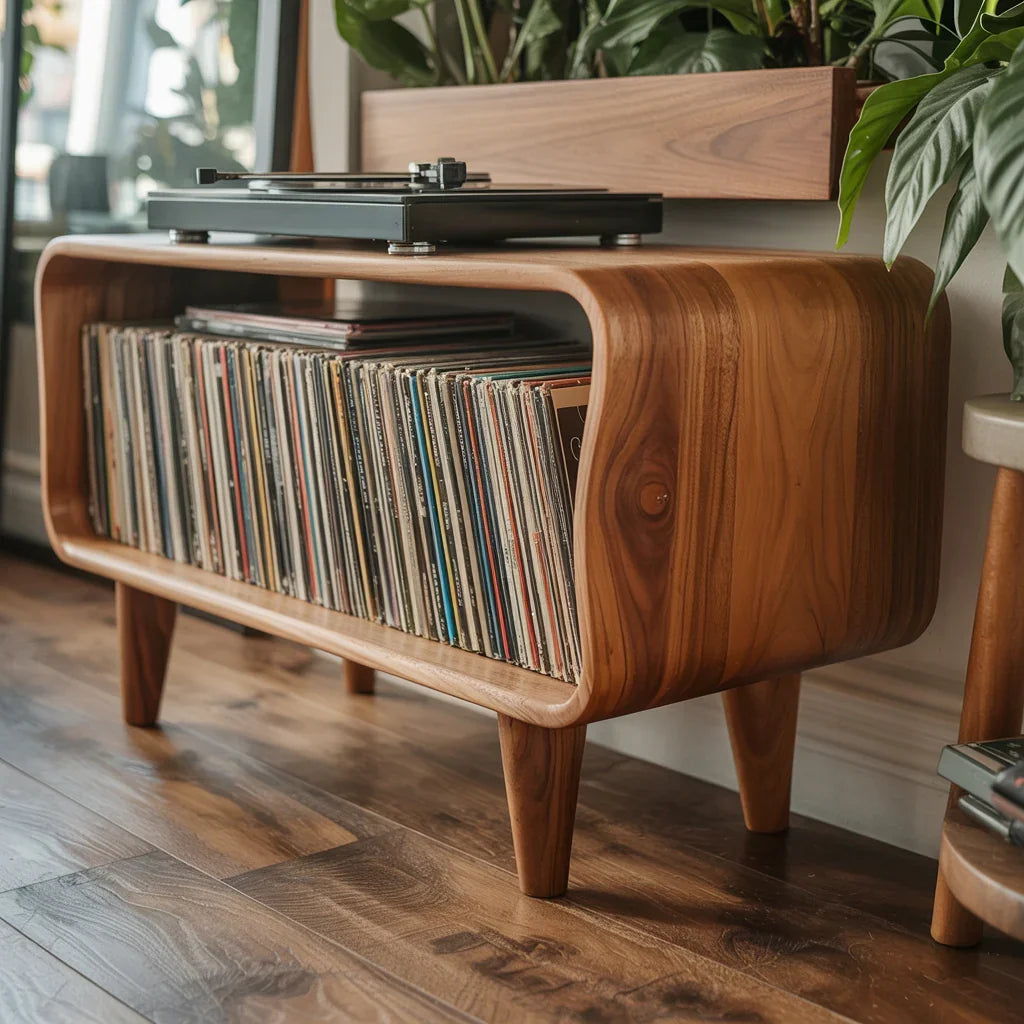
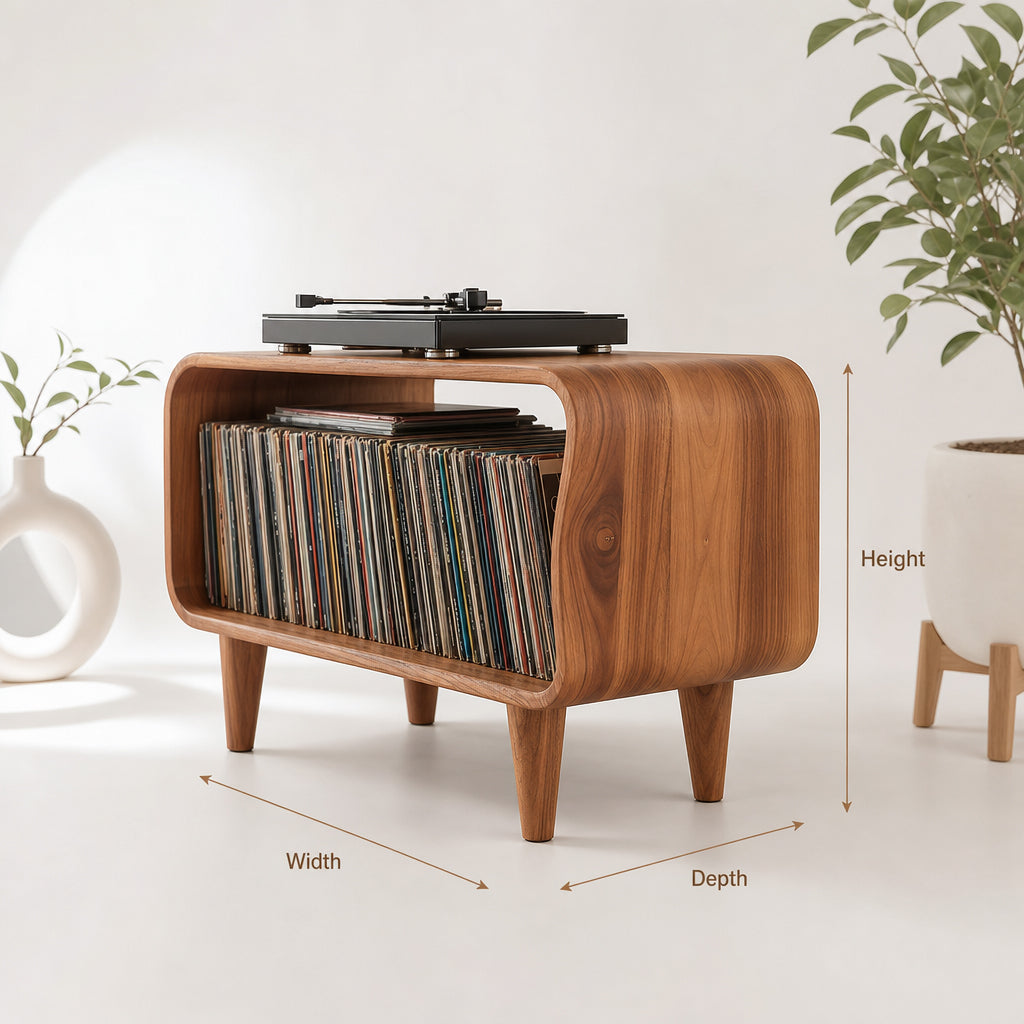
Our rustic solid wood wine bottle holder is a handmade countertop piece in mid-century style. For the full countertop comparison, see our countertop wine holder guide.

2. Wall-Mounted Wooden Wine Rack (The Space Saver)
Mounts to the wall. Bottles sit in holes, on ledges, or in cradles. Frees counter and floor space entirely.
Use it in a galley kitchen where counter space is precious, in a dining room on an accent wall, or above a bar floating shelf as a complete bar setup.
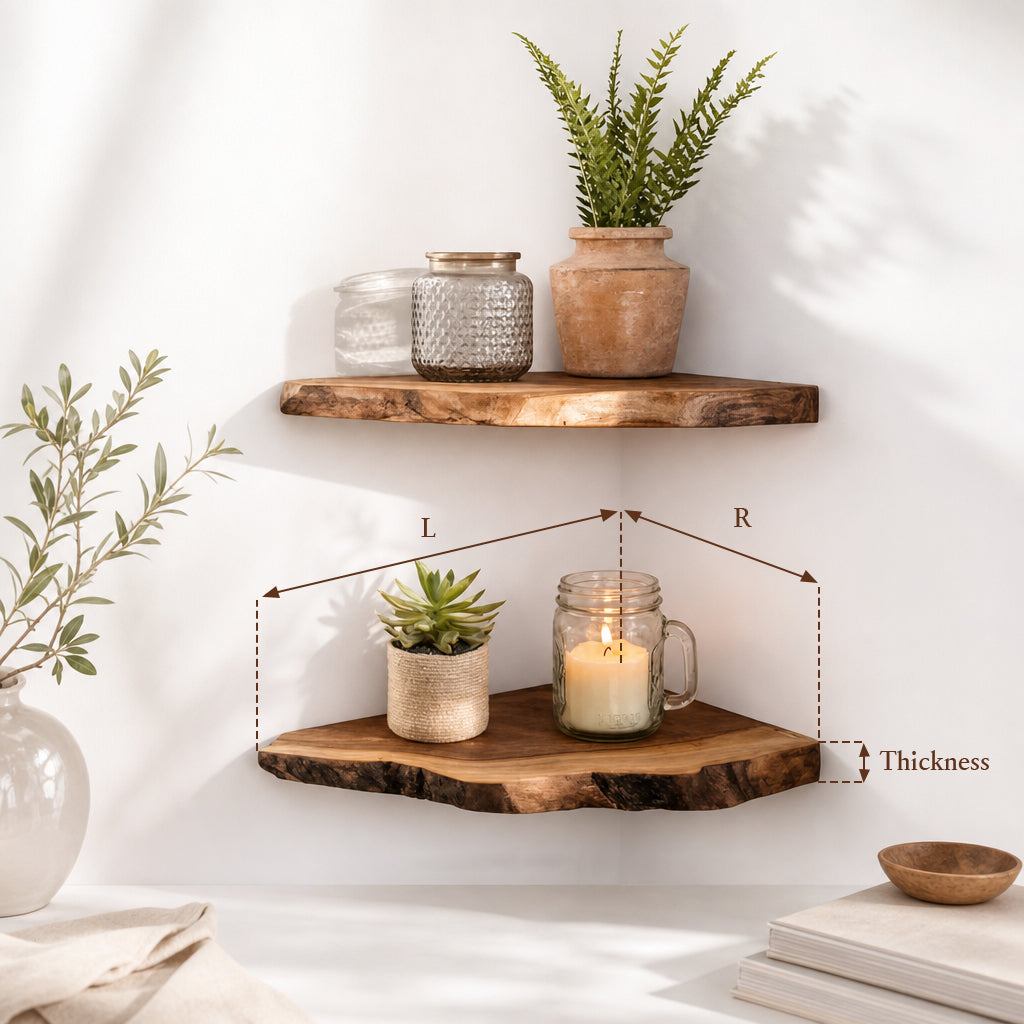
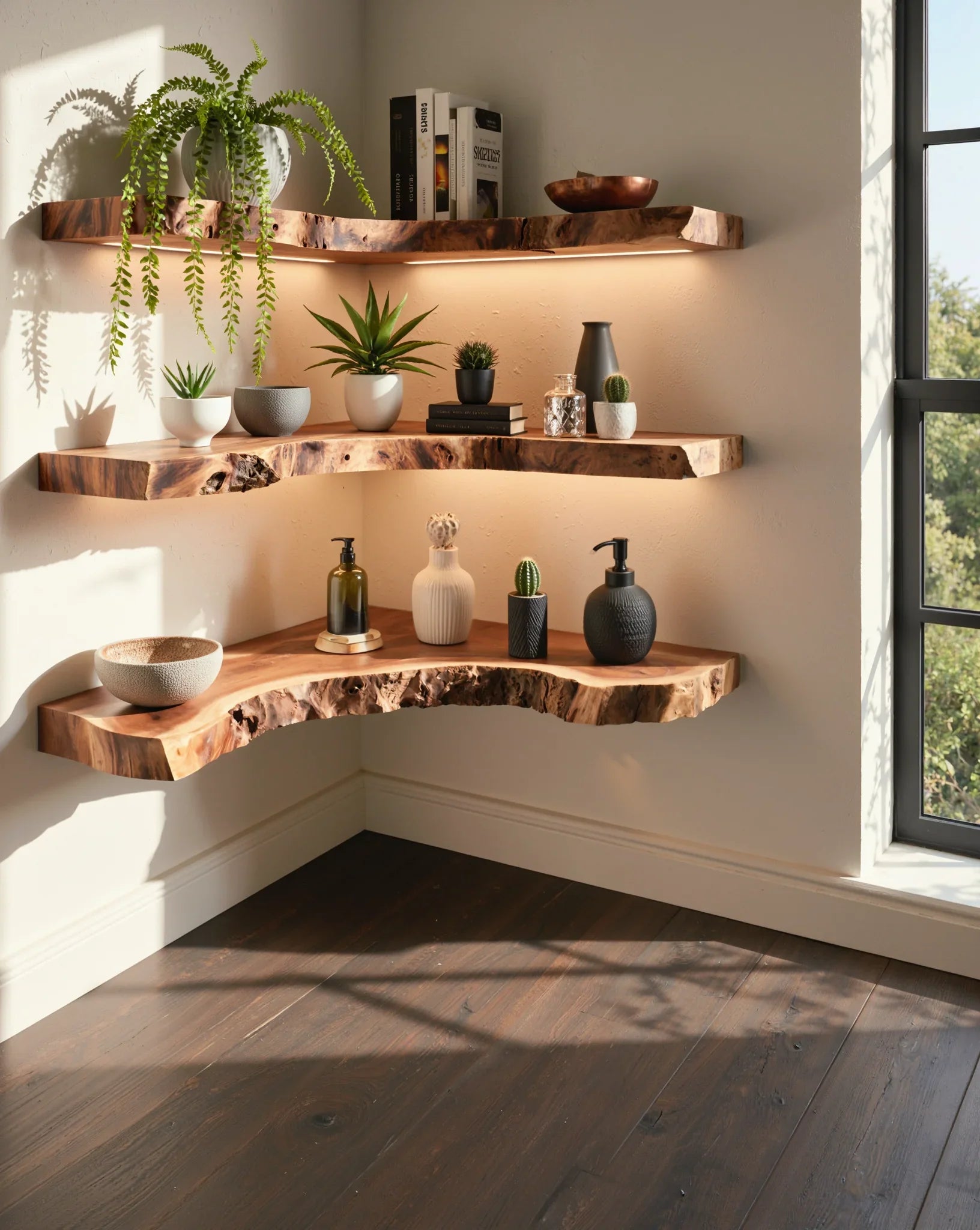
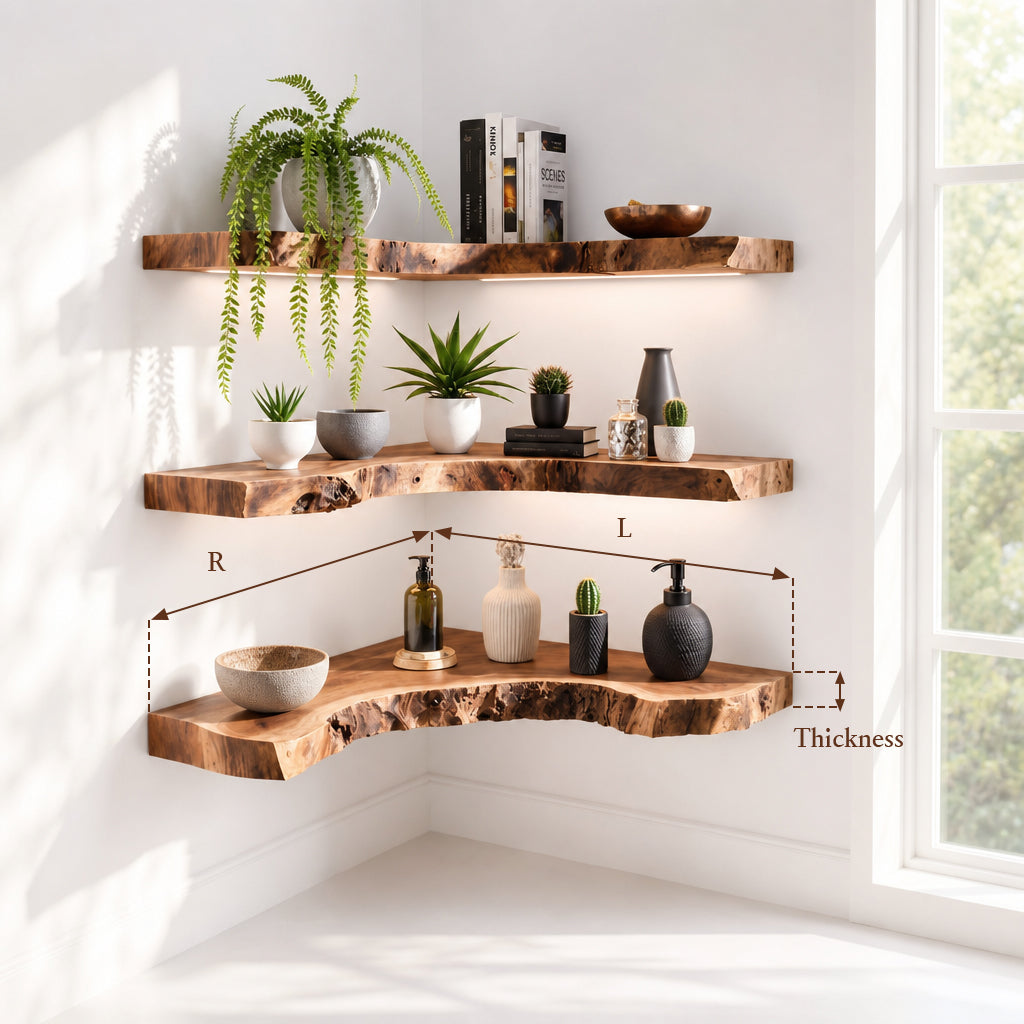
Skip it if the wall cannot support the loaded weight. A 6-bottle rack with bottles weighs about 18 lbs of bottle alone, plus the rack's own weight. See our wall-mounted wine rack ideas for layout options, including corner L-shaped configurations.
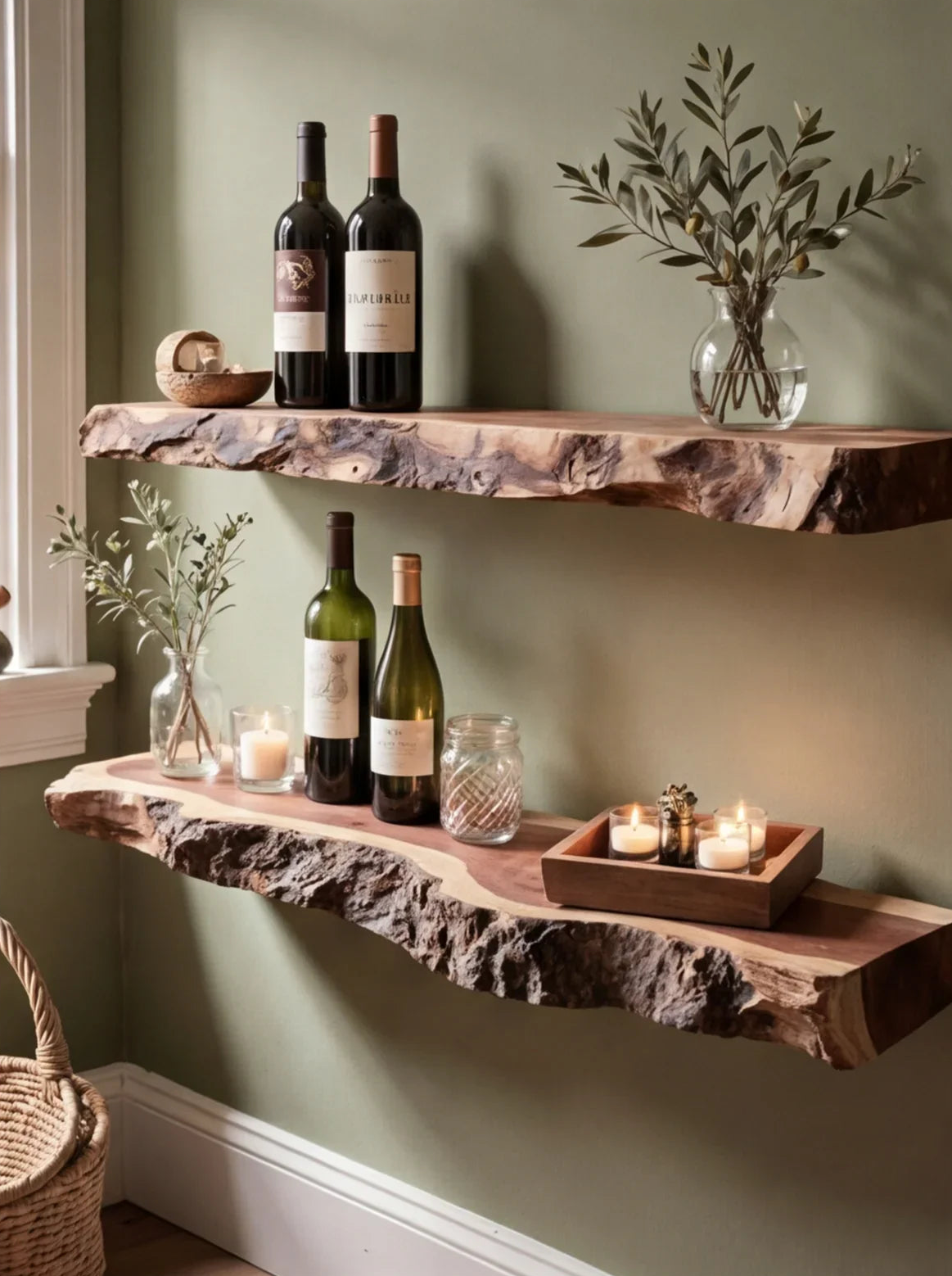
Our live edge wooden wine rack shelf is a wall-mounted piece with optional LED lighting.

3. Floor-Standing Wooden Wine Rack (The Collection Piece)
Freestanding on the floor. Holds 12-50+ bottles. Often part of a larger bar or cellar setup.
Use it when you have a dedicated wine collection and the floor space to support a larger piece. Also the right answer for restaurants, wine bars, and tasting rooms.
Skip it in an apartment under 800 square feet unless the dining room doubles as a cellar and you have no other furniture to worry about.
4. Sculptural / Decorative Wine Holder (The Conversation Piece)
A wine rack that is designed first as art, second as storage. Tree trunk shapes, Christmas tree silhouettes, organic forms.
Use it when the wine rack is visible from the living area and needs to earn its visual keep. A piece that looks like a tree trunk but holds bottles and glasses does double duty: storage and sculpture.
Our tree trunk wine rack with glass holder is a handmade solid wood piece with wine shelf and glass holder, built for farmhouse kitchen or home bar décor. The Christmas tree wine rack is a seasonal sculptural option.
Skip it if the sculptural form compromises bottle access - some artistic racks require you to remove three bottles to reach the one you want.

Horizontal vs Angled Storage: Does It Matter?
Wine should be stored so the liquid touches the cork. This keeps the cork from drying out and letting air in.
Horizontal storage: bottle lies flat. Cork is fully submerged. Ideal for long-term aging (6+ months).
Angled storage (15-45 degrees): bottle tilts upward. Cork still touches liquid. Acceptable for short-term storage (drinking within a year). Most countertop racks use this angle because it is easier to see the label.
Vertical storage: bottle stands upright. Cork dries out over months. Only acceptable for wine you will drink within weeks, or for screw-cap wines where the cork is not involved.
Most wooden wine holders on the market use horizontal or slight-angle storage. If a rack holds bottles vertically, it is a display rack, not a storage rack. Fine for the kitchen counter if you drink the bottle within a month. Bad for anything you are saving.

Wood Species for Wine Racks
The wood matters because it touches or is near the cork, and because the rack holds 3 lbs per bottle - sustained load on a structure that people reach into regularly.
Solid hardwood is the gold standard. Woods like sheesham, mango, acacia, oak, and walnut offer durability, beauty, and natural grain patterns that improve with age (from our wooden wine rack buying guide).
Why these species:
- Acacia: bold grain patterns, dense, naturally water-resistant. Stands out as a centerpiece. Used across our bar shelves and wine holders.
- Walnut: rich dark tones that suit moody bar aesthetics. Premium look. Heavy enough to stabilize a countertop rack.
- Teak: naturally moisture-resistant, which helps near sinks or when condensation drips from cold bottles. Dense hardwood that holds heavy loads without sagging.
- Oak (white): durable, moisture-resistant at a reasonable price. The everyday workhorse.
Species to avoid for wine racks:
- Pine: too soft. Bottle holes wear and widen over time, and bottles start to rattle.
- MDF / particle board: absorbs moisture from condensation, swells, and the bottle slots deform. Also may transfer chemical odor to the cork area.
- Untreated cedar: the aromatic oils that make cedar great for closets can transfer to wine corks.
Ashdeco uses only solid wood with natural live edge profiles, never MDF or veneered particle board. See our bar floating shelves collection for the same material standard applied to bar shelving.

Capacity: How Many Bottles Do You Actually Need?
| Situation | Bottles | Rack type |
|---|---|---|
| "I buy a bottle when I buy wine" (1-2/month) | 4-6 | Countertop holder |
| "I have a few bottles for guests" (1-2/week) | 6-12 | Countertop or small wall-mounted |
| "I buy cases and forget about them" | 12-24 | Floor-standing or large wall-mounted |
| "I have a wine habit" | 24-50+ | Floor-standing, cellar, or dedicated wine wall |
Do not buy a 24-bottle rack for six bottles. It looks empty, and an empty wine rack on a counter reads as "this was supposed to be a bar." Buy the size that matches your actual consumption, not your aspirational collection.
Placement: Where a Wood Wine Rack Works (and Where It Fails)
Works:
- Dining room sideboard or wood sideboard: bottles are visible, temperature is stable, and the rack complements the furniture.
- Kitchen counter near the prep zone (not next to the stove): convenient for cooking wine.
- Home bar on a bar floating shelf: the complete bar setup.
- Living room console or credenza: if the room doubles as an entertaining space.
Fails:
- Above or next to the stove: temperature swings cook the wine.
- In direct sun: UV degrades wine and fades the wood finish.
- In an uninsulated garage or shed: temperature extremes ruin both wine and wood.
- On a floating shelf without checking load: 6 bottles × 3 lbs = 18 lbs minimum. The shelf must be rated for it. See floating shelf weight limit guide.

Buying Checklist
- Bottle compatibility: check the hole or slot diameter. 3" for standard, 3.5" for champagne/Burgundy, 4" for magnums.
- Orientation: horizontal for aging, angled for quick-drink. Avoid vertical for corked wines.
- Capacity: match to actual consumption, not aspirational collection.
- Material: solid hardwood (acacia, walnut, oak, teak). If the listing does not name the species, walk away.
- Stability: the rack should not tip or wobble when you pull a bottom bottle.
- Placement plan: away from heat, sun, and temperature swings.
- Load rating for wall-mounted: bottles weigh ~3 lbs each. A 6-bottle wall rack = 18+ lbs. Mount into studs.
Starting points: tree trunk wine rack with glass holder, live edge wall-mounted wine rack, rustic countertop wine holder, or browse the full wine holder collection. For more detail: wooden wine rack buying guide, countertop wine holder options.
FAQ
What is the best wood for a wine rack?
Solid hardwoods like acacia, walnut, oak, and teak. They are dense enough to hold the bottle load, resist moisture from condensation, and do not transfer odor to corks. See our buying guide.
Should wine bottles be stored horizontally or vertically?
Horizontally, so the liquid touches the cork and keeps it from drying out. Angled (15-45°) is fine for bottles you will drink within a year. Vertical storage dries out corks within months.
How much does a wine bottle weigh?
About 3 lbs (1.4 kg) for a standard 750ml bottle. A 6-bottle rack holds about 18 lbs of bottles alone.
How big should the bottle holes be?
3 inches for standard Bordeaux bottles, 3.5 inches for Burgundy and champagne, 4+ inches for magnums. Check the listing - most racks only fit standard Bordeaux.
Can I put a wine rack on a floating shelf?
Yes, if the shelf is rated for the load. Six bottles weigh about 18 lbs. Check the floating shelf weight limit guide for your wall type and shelf size.
Where should I NOT put a wine rack?
Next to the stove, in direct sun, in a garage, or on top of the fridge. Temperature swings and UV degrade wine quickly.
Does a wood wine rack need to be finished?
A food-safe finish (natural oil, lacquer) protects the wood from condensation and keeps it cleanable. Unfinished wood absorbs moisture and can develop mold near the bottle contact points.