

Quick view
Shop this guide
Handcrafted Dining Tables, made to order in solid wood.
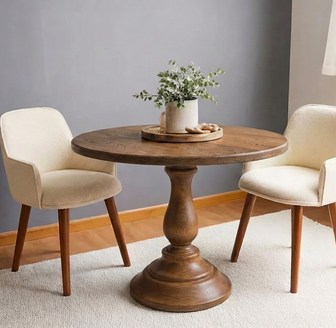
 Round Solid Wood Pedestal Dining Table Handcrafted Solid Wood Center Table
From $1,345.00
 Round Bistro Dining Table, Small Kitchen Breakfast Table, Compact Circular Dining Table
From $1,022.00
 Organic Modern Live Edge Solid Wood Dining Table - Handcrafted Slab Table with Dual Storage Pedestals
From $6,800.0010% off at checkout
 Round Solid Wood Dining Table with Architectural Spider Pedestal Base
From $1,254.00
 Flowing Pedestal Solid Wood Round Dining Table - Japandi Living Sculpture
From $5,850.0010% off at checkout
 Sculptural Pedestal Solid Wood Round Dining Table - Organic Modern Centerpiece
From $5,850.0010% off at checkout
Quick Answer: For a standard 8-foot ceiling, a widely used starting guideline is to hang a dining room chandelier so its lowest point sits 30–36 inches above the tabletop. Adjust the final height for the fixture's size, brightness, and seated sightlines rather than treating this range as a fixed rule. For width, aim for a fixture roughly one-half to two-thirds the width of the table. Taller ceilings may call for a higher placement to maintain visual balance. For general sizing guidance beyond the dining room, see the chandelier placement guide.

How High Should a Chandelier Be Above a Dining Room Table?
For an 8-foot ceiling, start with the lowest point of the chandelier 30–36 inches above the tabletop. This is a design guideline, not a fixed rule. The right height depends on the fixture's dimensions, brightness, glare, and how clearly diners can see one another across the table. A wide or visually prominent chandelier may work better toward the upper end of the range; check sightlines from seated eye level before installation.
Two measurements are easy to confuse:
- Table-to-fixture clearance: the vertical distance from the tabletop to the chandelier's lowest point.
- Ceiling-to-fixture drop: the vertical distance from the ceiling to the fixture's lowest point. This depends on ceiling height and the fixture's hanging hardware.
The table below assumes a 30-inch-high table and a fixture positioned 30–36 inches above it. It shows the resulting ceiling-to-fixture drop; it is a measurement example, not a recommendation to use the same tabletop clearance for every ceiling height.
| Ceiling Height | Ceiling-to-Fixture Drop | Lowest Point Above Table | Lowest Point Above Floor |
|---|---|---|---|
| 8 ft (96") | 30–36" | 30–36" | 60–66" |
| 9 ft (108") | 42–48" | 30–36" | 60–66" |
| 10 ft (120") | 54–60" | 30–36" | 60–66" |
| 12 ft (144") | 78–84" | 30–36" | 60–66" |
On taller ceilings, you may choose to raise the chandelier above the 30–36-inch baseline to keep it visually connected to the dining area. If you do, recalculate the ceiling-to-fixture drop based on the chosen table clearance and the table's actual height. For very tall ceilings, consider the fixture's overall scale and suspension options rather than relying on a formula alone.
Chandelier Above Dining Table vs. Pendant Lights Over Dining Table
A chandelier isn't the only way to light a dining table from above, and the two options create different visual effects.
A chandelier above the dining table is typically one central fixture with multiple arms, bulbs, or branches. It creates a single focal point and can work well above a round or rectangular table when its proportions suit the surface below.
Pendant lighting over a dining room table may use two or more separate fixtures arranged in a row, especially above a long table. This gives you more flexibility in distributing light along the table without relying on one oversized fixture.
For either option, begin with the appropriate table clearance and adjust for glare, fixture dimensions, and sightlines. When arranging multiple pendants, plan spacing around each fixture's diameter, the table's length, and the intended light distribution. Avoid relying on a single fixed spacing rule for every pendant configuration.
A single chandelier can create a clear focal point over many standard dining tables. Multiple pendants may suit a longer table when you want light distributed across its length. Choose based on the table dimensions, the fixture's scale, and the overall layout rather than a strict seating-count cutoff.


Sizing a Dining Room Chandelier to the Table
Beyond height, consider the fixture's width and its position over the table.
Width: A useful starting point is a chandelier roughly one-half to two-thirds the width of the table. For example, a 48-inch-wide table may suit a 24–32-inch fixture; a 60-inch table, a 30–40-inch fixture; a 72-inch table, a 36–48-inch fixture; and an 84-inch table, a 42–56-inch fixture. Adjust for the fixture's shape and visual weight, and check that it does not feel crowded against the table's edges.
Centering: Center the chandelier over the table itself, not necessarily the room. In an open-plan space where the dining table sits off-center, use the table's actual position as your reference point.

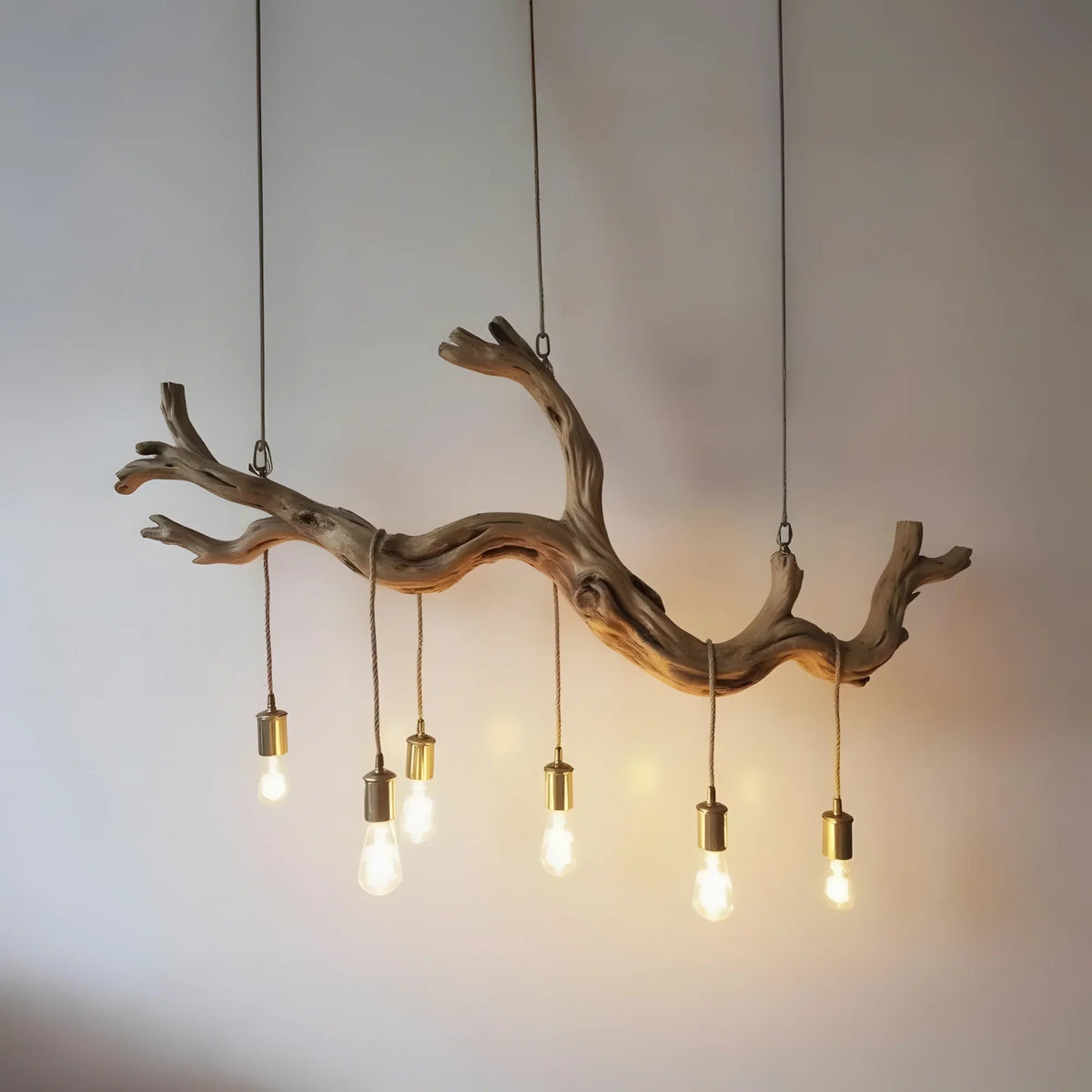
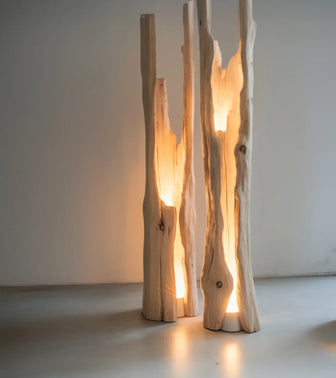
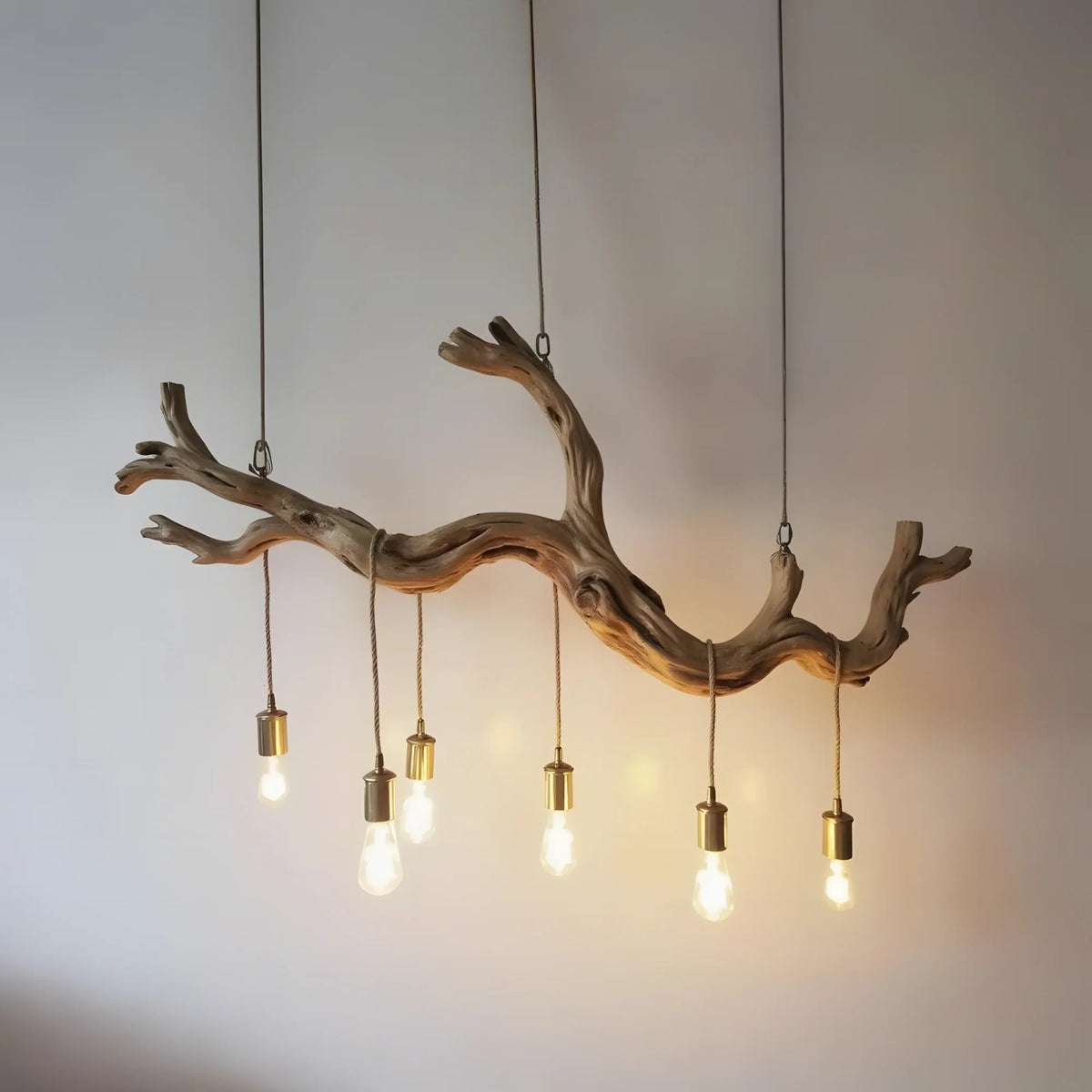
Driftwood Tree Branch Pendant Light – Reclaimed Wood Lamp Decor - $1,345
Common Dining Room Chandelier Mistakes
Measuring from the floor instead of the table. The table-clearance guideline is measured from the tabletop to the fixture's lowest point. Floor height alone does not tell you whether the chandelier is positioned comfortably above the table.
Sizing for the room instead of the table. A large dining room with a modest table still needs a fixture proportioned to the table. Use the one-half-to-two-thirds width guideline as a starting point, then account for the room and fixture's visual weight.
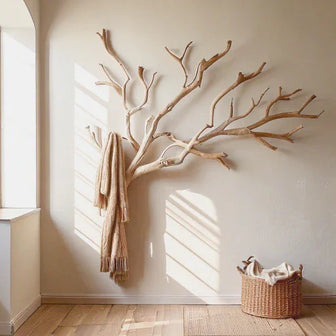
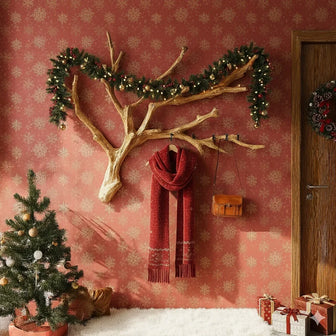
Ignoring the shape of a natural-form fixture. A chandelier made from a branch or driftwood may have an irregular profile. Measure clearance from its actual lowest point after accounting for the suspension hardware and final hanging position, not from an assumed average height.
Don't miss
These pieces qualify for 10% off orders over $2,000. Applied automatically at checkout.
10% off
Organic Modern Live Edge Solid Wood Dining Table - Handcrafted Slab Table with Dual Storage Pedestals
From $6,800.00
10% off at checkout
10% off
Flowing Pedestal Solid Wood Round Dining Table - Japandi Living Sculpture
From $5,850.00
10% off at checkout
10% off
Sculptural Pedestal Solid Wood Round Dining Table - Organic Modern Centerpiece
From $5,850.00
10% off at checkout
 10% off
Organic Live Edge Solid Wood Dining Table with Sculptural River Legs
From $4,180.00
10% off at checkout
A Natural-Form Option for the Dining Table
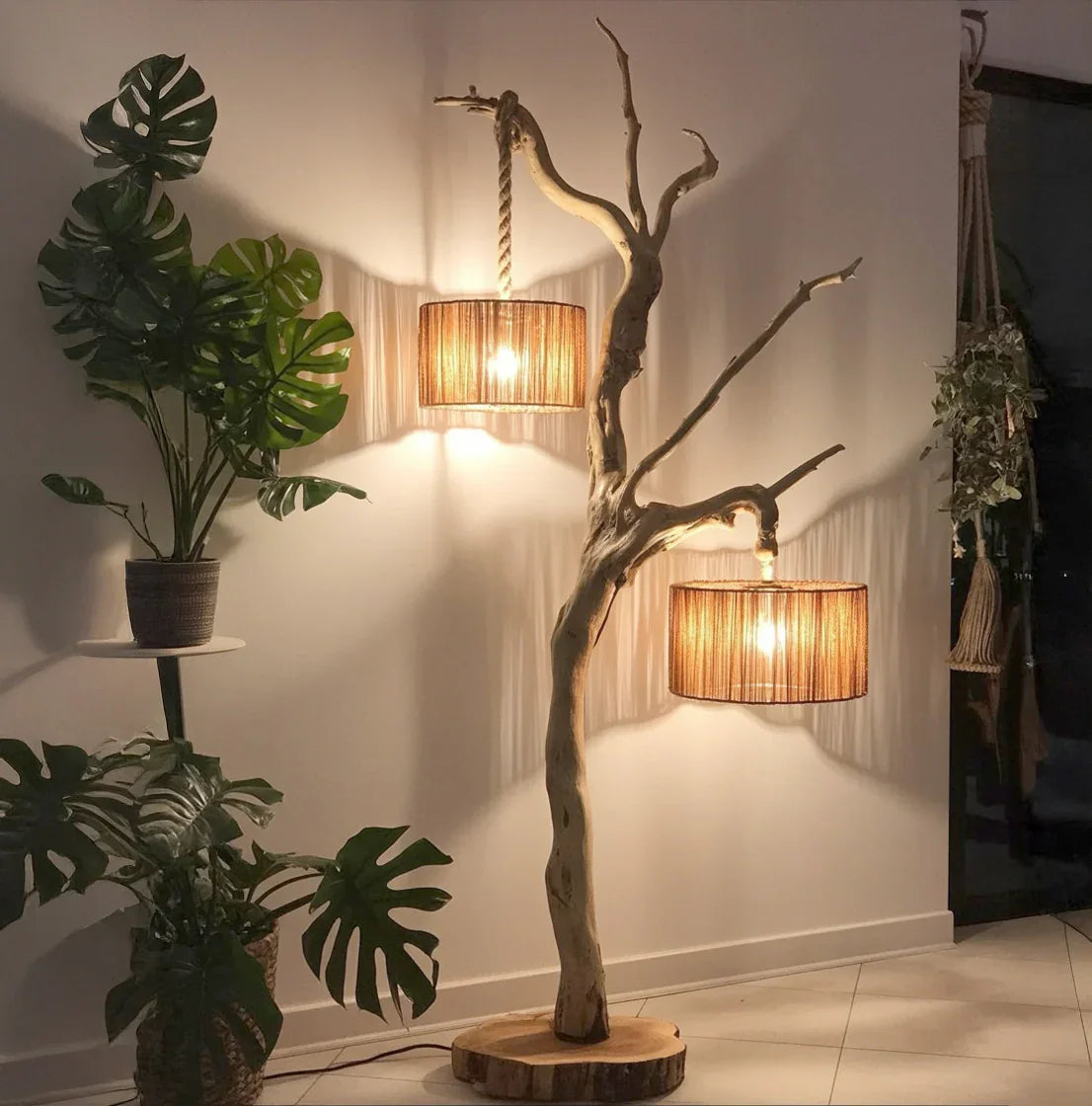
Ashdeco's Natural Driftwood Tree Branch Chandelier is available in 32-, 40-, and 60-inch widths. Because a natural branch can have an irregular profile, confirm the full dimensions and suspension adjustment for the selected size, then measure from the actual lowest point once the fixture's hanging position is established. For a different configuration, the Driftwood Tree Branch Pendant Light offers another branch-based lighting option. Check product details and installation requirements before choosing a fixture for your table.
Choose a Chandelier That Fits Your Dining Table
Before choosing a dining room chandelier, measure your table, note the ceiling height, and confirm the fixture's full dimensions and hanging adjustment. With a natural branch or driftwood design, pay particular attention to its lowest point because the silhouette may not be symmetrical.
Explore Ashdeco's Natural Driftwood Tree Branch Chandelier or compare it with the Driftwood Tree Branch Pendant Light. Confirm available dimensions, suspension details, and installation requirements before ordering.
FAQ
How high should a dining room chandelier hang above the table?
For a standard 8-foot ceiling, 30–36 inches above the tabletop is a widely used starting guideline. Measure to the fixture's lowest point, then adjust for its dimensions, brightness, glare, and seated sightlines.
How does ceiling height affect dining room chandelier placement?
A taller ceiling may call for a higher chandelier placement to maintain visual balance. The 30–36-inch guideline is commonly used for an 8-foot ceiling; for taller ceilings, consider raising the fixture and check the proportions of the table, room, and light.
What width chandelier should I choose for my dining table?
A useful starting point is a fixture about one-half to two-thirds the width of the table. For example, a 60-inch-wide table may suit a 30–40-inch fixture. Adjust for the fixture's shape and visual weight.
Can I use pendant lights over a dining room table instead of a chandelier?
Yes. Multiple pendants can distribute light along a longer table, while a single chandelier creates one focal point. Plan pendant spacing around each fixture's diameter, the table length, and the desired light distribution.
Should a dining room chandelier be centered over the table or the room?
Center it over the dining table. In an open-plan room, the table may not be centered in the overall space, so use the table's position rather than the room's geometric center.
For general chandelier sizing guidance, see the chandelier placement guide.